
Chery plans to sign a strategic agreement with UAE-based K2 at its user summit in Wuhu this month. The carmaker calls the deal a first step towards running its Level 4 robotaxi commercially outside China. However, it hasn’t named a city, a fleet size or a launch date.
What is Chery announcing?
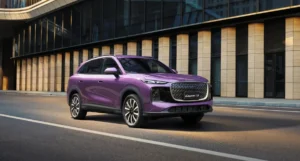
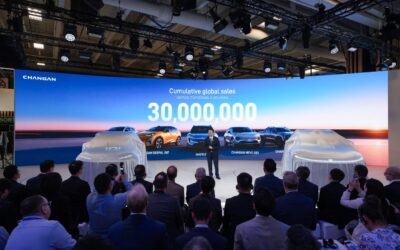
Chery Auto will show its purpose-built Level 4 (L4) robotaxi at the 2026 Chery International User Summit. The event runs from 19 to 23 October in Wuhu, China. During the summit, the company also plans to sign a strategic cooperation agreement with K2, a firm based in the UAE.
According to the press release, the planned partnership marks “an initial step toward international commercial deployment”. In other words, this is a signing ceremony, and no fleet will start carrying paying passengers yet. Chery first presented the robotaxi in April, so the summit gives it a second public outing.
The summit’s theme is “ECO-TECH FOR OUR FUTURE LIFE”. Chery expects more than 2,000 vehicle owners, journalists and ecosystem partners to attend.
How would a ride actually work?
Visitors to an on-site demonstration area will see what Chery describes as the complete driverless passenger journey. First, a passenger books a ride through an app. Then cloud-based dispatch sends a robotaxi to the pickup point.
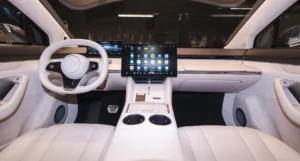
Before the car arrives, riders can adjust the cabin temperature remotely. Once it pulls up, the hazard lights flash to show it’s ready for boarding. The app also unlocks the doors and opens the boot with a single tap, so nobody needs a driver on board. Chery says the aim is a private, quiet trip with no manual intervention from pickup to arrival.
Behind the scenes, Chery says it designed the car to run its own daily operating cycle. That cycle covers deployment, repositioning, energy replenishment, self-service cleaning and vehicle inspections. The company argues these functions will cut fleet maintenance costs and help operators scale up. However, those savings remain a manufacturer claim, and Chery hasn’t published any supporting figures.
What makes this robotaxi different?
Chery stresses that it engineered the vehicle around driverless operation from the start. The company contrasts this with vehicles that receive autonomous hardware after they leave the factory. It groups its approach under five “native” principles: architecture, factory integration, experience, operations and global adaptability.
Safety sits under a six-part management framework that Chery calls automotive-grade. It starts with full-cabin passenger protection. Next comes what the company terms four-dimensional perception, combining tactile, visual, acoustic and wave-based sensing. The framework also covers algorithm training and decision-making, alongside six-fold redundant execution safety. Finally, cloud-based monitoring tracks behavioural safety, and a fleet management layer completes the set.
Chery also says it’s planning for local adaptation. Its development work accounts for different national regulations. Similarly, its validation covers traffic rules, climate conditions and communications networks in each market.
What don’t we know yet?
Quite a lot, in fact. The release gives no range, battery size, motor output, charging speed or price for the robotaxi. It also doesn’t explain what K2 does or what role it’ll play. Likewise, there’s no city, fleet size or start date for commercial service.
It’s worth noting, too, that every capability listed comes from Chery itself. The release doesn’t cite any independent testing of the system’s L4 performance. Level 4 means a car can drive itself without human supervision within a defined operating area. Even so, regulators in each country must approve that kind of service before passengers can ride.
Why is the K2 deal important?
Robotaxi developers face three stubborn hurdles: safety compliance, production costs and commercial viability. Chery names all three in its announcement. Accordingly, it presents the K2 agreement as support for bringing its factory-integrated robotaxi into commercial service overseas.
The company believes purpose-built engineering and factory-integrated autonomous technology will improve passenger experience, efficiency and cost at scale. Beyond this first agreement, Chery says it plans to expand its global robotaxi operations. Ultimately, it wants mass-production-ready driverless mobility that can run sustainably.
For now, though, the news is a planned signature. Once the summit ends, the real test will be whether the partners name a location, a timeline and a fleet.