
Xiaomi cars are now officially on sale in the UAE. Local distributor Gargash Prime Automotive has launched the SU7, the YU7 and the SkyNomad range-extender SUV, with prices starting at AED 169,900. Buyers also get a warranty of up to five years or 150,000 km. However, they’ll need some patience, because the first deliveries start in December 2026 and most trims follow in February 2027.
What has actually been announced?
Gargash Prime Automotive is now selling three Xiaomi models in the UAE. The line-up includes the SU7, the YU7 and the SkyNomad. The first two are battery electric models. Meanwhile, the SkyNomad is described as a range-extender SUV.
This marks a significant step for the brand. Most people still know Xiaomi for smartphones, laptops and home gadgets. Its car business started in China, and the SU7 put it on the motoring map there. Now the company is taking its vehicles to new markets through local partners, and the UAE is one of them.
How much will a Xiaomi car cost?
The range starts at AED 169,900. That entry price places Xiaomi in a competitive part of the market. Many buyers in this bracket already weigh up rivals from established European, Japanese and Chinese brands.
That starting price buys the SU7 Standard. The YU7 Standard costs from AED 184,900, while the SkyNomad N70 Pro starts at AED 209,900. Across 13 trims, prices climb to AED 299,900 for the YU7 GT and AED 375,900 for the SU7 Ultra. For buyers who’d rather not own outright, Gargash Prime also offers leasing from AED 3,899 a month. Shoppers should still check exactly what equipment comes with each trim.
Which models are coming?
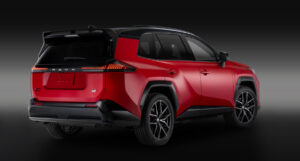
The SU7 is the car that launched Xiaomi’s automotive ambitions. It’s a sleek electric saloon with a sporty profile. Next comes the YU7, an electric SUV. It’s aimed at families and buyers who want more space and a higher driving position.
As a range-extender SUV, the SkyNomad pairs a 52 kWh battery with a 1.5-litre turbocharged petrol engine. The engine only generates electricity, and electric motors always drive the wheels. As a result, drivers get an electric feel without relying entirely on public chargers.
That approach could appeal to people who regularly cover long distances. It may also suit drivers who live away from reliable charging.
The SU7 Standard has 320hp, rear-wheel drive and a claimed range of 720 km. The YU7 Standard pairs the same output with a claimed 643 km. Both entry models use a 73 kWh battery on an 800V platform. On a fast DC charger, the SU7 goes from 30 to 80 per cent in about 18 minutes. At the top of the range, the three-motor SU7 Ultra produces 1,548hp and claims 0 to 100 km/h in 1.98 seconds. Meanwhile, the SkyNomad N90 versions claim up to 1,705 km of combined range. All range figures use China’s CLTC test cycle, which runs well ahead of real-world driving. Every figure here is a manufacturer estimate.
When will buyers get their cars?
Deliveries won’t happen straight away. Instead, Gargash Prime Automotive is rolling them out in stages. The first deliveries begin in December 2026, and a further wave follows from February 2027.
Gargash Prime lists the SU7 Standard, SU7 Ultra, YU7 Standard, SkyNomad N70 Pro and both N90 versions for December 2026. Every other trim sits on a pre-order waitlist for February 2027. Xiaomi builds each car to order, and Gargash Prime warns that early allocations are limited. Even so, it’s worth asking about deposits, cancellation terms and what happens if specifications change before handover.
What does the warranty cover?
Gargash Prime Automotive is offering a warranty of up to five years or 150,000 km, plus servicing for up to 60,000 km. That’s a meaningful reassurance for a brand that’s new to the market. After all, buyers often worry about servicing, parts supply and resale value when a carmaker first arrives.
The phrase “up to” is important, though. It suggests cover may differ between models or components. For example, warranties on electric cars often treat the battery separately from the rest of the vehicle. Consequently, buyers should read the terms closely and ask how long the battery and drive system are covered.
Why is this launch important?
Xiaomi’s move shows how quickly Chinese technology companies are expanding into cars. Many of these firms bring strong software and connectivity skills from consumer electronics. In addition, they often price their vehicles aggressively to win attention.
For established carmakers, that creates fresh pressure. Buyers now have more choice in the electric and range-extender space, and that competition tends to push prices and features in their favour. Furthermore, a familiar consumer brand could encourage some first-time buyers to consider an electrified car.
The UAE launch also offers a useful test. It will show how well Xiaomi’s cars, service network and dealer partnership perform outside China. If the rollout goes smoothly, it could shape how the brand approaches other markets.
What should potential buyers do next?
Interested shoppers should start by visiting Gargash Prime Automotive for full details. They should ask for confirmed specifications, trim-level pricing and delivery dates for their chosen model. It’s also sensible to check servicing arrangements and charging options at home.
Finally, it pays to be patient. With first deliveries set for December 2026, there’s time to compare Xiaomi’s offer with rivals. Independent reviews will likely appear before then, giving buyers a clearer picture of real-world performance.