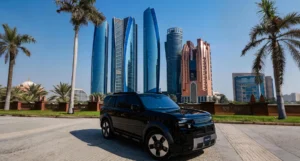

Saudi Arabia’s new-car market is growing steadily, and Chinese brands are claiming a larger share of it with every passing month.
How Fast Is the Saudi Market Growing?
Saudi Arabia recorded around 410,000 new vehicle sales in the first half of 2026. That figure is up 6.2 per cent from the same period a year earlier.
Toyota led the market by a considerable margin. The Japanese brand posted 126,300 sales and a 30.8 per cent share. Hyundai and Kia followed in second and third place. Nissan, Ford, and Isuzu also maintained a meaningful presence in a market where buyers value durability and aftersales support.
Where Do Chinese Brands Now Stand?
Chinese manufacturers combined for around 55,000 sales in the first half of 2026. That gave them a 13.4 per cent share of the total market.
Four Chinese brands placed in the top ten: MG, Haval, Jetour, and Changan. That level of collective presence would have seemed ambitious only a few years ago. As a result, the market picture looks meaningfully different from earlier years. Chinese brands are now part of mainstream buying decisions across the Kingdom.
What Is Driving Chinese Brand Growth?
Pricing has played a clear role. Chinese manufacturers have come to market with well-equipped SUVs at sharp price points. In addition, improved warranty terms and expanding dealer networks have helped build buyer confidence.
However, Chinese brands are no longer competing on price alone. Regional auto coverage shows they are increasingly selling hybrid and electrified models alongside feature-heavy cabins. Saudi buyers lean heavily towards larger family SUVs. That preference has worked in Chinese brands’ favour, as their model ranges map closely to it.
Which Models Are Gaining Ground?
Chery has posted strong regional growth in the first half of 2026. The Tiggo 7 Pro and Jaecoo 7 have both contributed to that performance. Jetour has also performed well, leading Chinese brand rankings in several monthly tallies across the Gulf region.
MG continues to sell in high volumes across the Kingdom. Meanwhile, Haval and Changan have each carved out steady positions in the mid-size SUV segment. Together, these brands show that Chinese growth in Saudi Arabia is spread across multiple manufacturers, not concentrated in a single name.
Can Toyota’s Lead Be Challenged?
Toyota’s position in Saudi Arabia is deeply established. High resale values, broad showroom coverage, and a long reputation for reliability give the brand advantages that take years to build. Consequently, no Chinese brand is close to matching Toyota’s individual sales volume in the short term.
However, the direction of monthly data is consistent. Chinese brands have gained share month by month through early and mid-2026. For Saudi consumers, that means more choice, more technology, and more competition on hybrid and electric offerings. The market is rebalancing gradually, and that process shows no sign of slowing.