
Bentley has revealed the Torcal, the first fully electric car in its 107-year history. The five-metre model has a range of up to 600km on the WLTP test cycle, according to Bentley. It’s the British brand’s clearest step yet towards a battery-powered future, and it arrives as many luxury buyers remain cautious about going electric.
What has Bentley revealed?
The Torcal is a fully electric car built around everyday usability. Bentley revealed the car at a global debut in London on 23 September. The company designed, engineered and builds it in Crewe.
Chief executive Frank-Steffen Walliser framed the car as a continuation of the brand’s values. “For 107 years, Bentleys have been the most incredibly complete cars,” he said. He added: “I believe this is one of the best Bentleys ever.”
Bentley also hopes the Torcal will draw an entirely new group of customers to the brand. In addition, it completes what the company calls the “luxury of choice”. Buyers can now pick between combustion, plug-in hybrid and fully electric powertrains across the range.
How far will the Torcal go on a charge?
Bentley quotes a range of up to 600km, or 375 miles, on the WLTP test cycle. The 113kWh battery runs on an 800-volt system and accepts up to 400kW. As a result, Bentley says a 10 to 80 per cent charge takes under 20 minutes. However, these are manufacturer figures, and independent testing hasn’t confirmed them yet.
Twin electric motors power the car. The standard Torcal produces 821PS and 1,194Nm, reaching 100km/h in 3.4 seconds. Meanwhile, the Torcal S raises output to 888PS and 1,350Nm, and cuts that time to 2.9 seconds. Bentley hasn’t yet announced prices or delivery dates.

What does the new design look like?
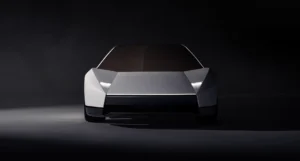
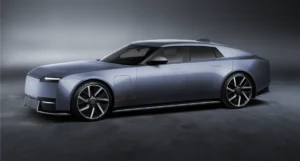
The Torcal introduces a fresh design language for the marque. Most striking is a fully illuminated grille. At first it looks surprising, yet it gives the car a distinctive face while keeping the Bentley identity clear.
Meanwhile, the car drops some familiar cues, including Bentley’s signature round headlights. Even so, the proportions stay recognisable. In profile, the Torcal sits low, with muscular rear haunches that give it the stance of a grand tourer.
So Bentley has used the freedom that electric packaging offers. At the same time, it has tried to keep every modern detail tied to its own design history.
What’s changed inside the cabin?
Inside, the cabin evolves Bentley’s familiar craftsmanship. The brand says it places as much weight on driver well-being as on luxury.
A curved central touchscreen handles many functions. Still, it doesn’t dominate the dashboard. There’s also no separate passenger display, which sets the Torcal apart from many rivals.
Moreover, Bentley has kept plenty of machined physical controls. That choice suggests the company believes tactile quality still matters to its buyers, even in an electric car.

Why has Bentley taken so long?
Bentley has moved carefully. Throughout the presentation, the message stressed continuity. The brand insisted that going electric won’t mean losing the qualities that have defined it for more than a century.
That caution makes sense. Several high-end electric launches have shown that luxury buyers are more hesitant than many carmakers expected. As a result, Bentley leaned on plug-in hybrids first.
In February 2025, Walliser described the shift as “maybe the most demanding task in the history of the car.” He added that it was “clearly driven by regulation”, but noted real demand for plug-in hybrids. “That’s why we are extending our hybrid offering while preparing a full electric Bentley,” he said.
He also pointed to the hybrid-only Continental GT and Flying Spur as proof that customers were accepting the change. According to Walliser, drivers told the company the hybrid “adds more to the car than it takes away.”
Those models became a bridge to full electrification. At the same time, Bentley pushed back its goal of becoming an all-electric brand to 2035.

Who is the Torcal meant for?
Some long-time fans will miss the charismatic W12 and V8 engines. Bentley knows this. Nevertheless, it’s betting that the Torcal will widen the brand’s appeal.
In particular, the company wants buyers who care more about heritage, craftsmanship and modern technology than engine size. The focus on everyday use also hints at a car meant for daily driving, as well as long trips.
For context, the original Continental GT turned Bentley from a niche maker into a global luxury name. Many observers see the Torcal as the brand’s most significant launch since then.
What happens next?
For now, Bentley has shown the car and published its core figures. Next, it needs to confirm pricing and delivery dates.
Until then, the 600km range remains a manufacturer figure from the WLTP cycle. Independent testing will show how the Torcal performs in real conditions. Only then will it be clear whether Bentley’s careful path to electric power has paid off.