
BYD executive vice-president Stella Li says the company holds “the leading position” on solid-state batteries, and it plans to put its first EV using the new cells on the road in 2027. That would turn a long-promised laboratory technology into a dated product commitment from the world’s largest EV maker.
When will BYD launch an EV with solid-state batteries?
Solid-state cells have been described as the “holy grail” of battery technology for more than a decade. So far, though, the promise has mostly stayed in the laboratory, with carmakers announcing breakthroughs that rarely reach the road.
Now BYD says that timeline is finally moving. According to the company, solid-state cells are advancing and will power vehicles as soon as 2027.
Li made the comments in a September interview with Carwow.es about BYD’s expansion into Spain and the European launch of its luxury Denza brand. During that conversation, she offered a look at what the company has planned.
What is BYD selling in Europe right now?
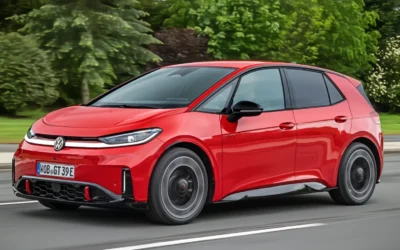
The Denza Z9 GT is the brand’s first vehicle to launch in Europe with BYD’s five-minute “Flash Charging” technology, and it is now on sale. Alongside it, BYD’s Blade Batteries 2.0 and the same charging system let vehicles recharge from 10 percent to 70 percent in five minutes, according to the company. Going from 10 percent to 97 percent takes about nine minutes on BYD’s figures.
These are manufacturer estimates rather than independently verified results. To build awareness as it moved into higher-end segments, BYD offered 18 months of free Flash Charging to Denza buyers who ordered by the end of September.
How far along is BYD’s solid-state work?
While the new charging technology is already drawing buyers, BYD is also pushing several types of next-generation cell, solid-state among them. “You can name any battery technology, and I will guarantee you will find it in one corner of BYD R&D that we are studying,” Li said.
On solid-state specifically, “BYD is in the leading position,” Li added, in both commercialisation and technology. She said BYD would “prove that” with its first model using the new cells, due in 2027. It would be BYD’s first EV to run on solid-state batteries.
The battery research team is “very strong,” Li said, adding that it is studying not only the chemistry but also the manufacturing and equipment needed to mass-produce the cells.
What has BYD said about the technical hurdles?
Li did not give specific details. However, at a conference on 7 April, BYD Group chief scientist Lian Yubo said all-solid-state EV batteries had reached “a critical stage,” while warning that several hurdles remained before commercialisation. He added that solid-state batteries are not the only path for battery development, and urged continued work on liquid lithium-ion cells.
BYD’s battery arm, FinDreams, aims to begin producing sulphide-based all-solid-state batteries in limited batches in 2027, then ramp up to mass production by 2030.
Sun Huajun, chief technology officer of Shenzhen BYD Lithium Battery, said in 2025 that sulphide electrolytes last longer and are more stable than traditional liquid lithium-ion cells. As a result, he said, they should be safer, charge faster and offer longer range.
The first vehicles to use solid-state cells will likely come from BYD’s premium brands such as Denza, Yangwang and Fangchengbao. Afterwards, the technology would move to higher-volume models.
How does BYD compare with rivals?
BYD is far from alone in setting a near-term date. In China, Geely, Changan Auto and CATL are also targeting 2027. Toyota, Stellantis and Mercedes-Benz are developing and testing solid-state cells on a similar timescale.
Even so, wider commercialisation is not expected until closer to 2029 or 2030. Real-world testing has already begun, however. In September 2025, Mercedes-Benz drove a modified EQS over 745 miles, about 1,200 km, using solid-state cells from Factorial Energy.
Why does the 2027 date matter?
For years, solid-state promises have arrived without firm delivery dates. Now BYD, the world’s largest EV maker, is attaching a specific year to a specific product. If it holds, buyers could see faster charging, longer range and safer cells reaching showrooms sooner than many expected.
The caveats are real. BYD itself frames 2027 as a limited-batch start rather than mass production, and its charging and range claims remain company estimates for now. Still, a dated commitment from BYD raises the pressure on rivals chasing the same goal.