Several major Chinese manufacturers are racing to bring all-solid-state batteries into production vehicles within two years, with implications for energy density, safety, and driving range across the electric vehicle market.
What are all-solid-state batteries and why do they matter?
All-solid-state batteries replace the liquid electrolyte found in conventional lithium-ion cells with a solid material. This change delivers measurable gains in energy density, safety, and charging speed.
Industry data suggests these cells could exceed 400 watt-hours per kilogram. For context, current battery packs typically fall between 180 and 300 Wh/kg. Consequently, the jump in energy storage is considerable. In some applications, driving range could extend beyond 1,000 kilometres on a single charge. The solid electrolyte also reduces the risk of thermal runaway, a serious hazard in liquid-based lithium packs. In addition, solid-state cells perform more reliably at temperature extremes, giving them an advantage in diverse climates.
Which Chinese manufacturers are furthest along?
SAIC Motor is among the most advanced. The state-owned company already has semi-solid-state batteries in production vehicles, including the MG4 Urban. SAIC is working with Qingtao Energy on a fully solid-state programme called Guangqi. Global China EV reported that SAIC has set a mass-production target for 2027, with an energy density goal above 400 Wh/kg. Automotive Manufacturing Solutions reported that SAIC is using its semi-solid rollout as a bridge to the full transition.
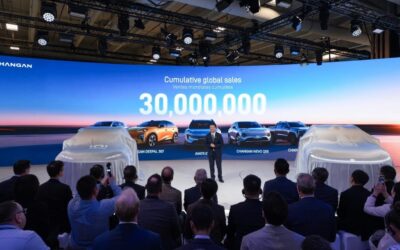
BYD is moving along a similar timeline. According to Electrek, the company plans to introduce all-solid-state batteries in its premium lines from 2027. Those lines include Denza, Yangwang, and Fang Cheng Bao. Wider adoption across BYD’s range is planned for later in the decade. Meanwhile, Changan has said it expects to test solid-state batteries in vehicles before the third quarter of 2026, with production starting in 2027. Chery and lithium supplier Ganfeng are also preparing for pilot-scale development, according to reporting from CarNewsChina.

How does China’s supply chain position affect this race?
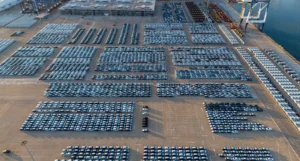
China’s domestic battery industry gives its carmakers an unusual degree of control over the next battery cycle. The International Energy Agency has reported that China accounts for more than 70 per cent of global electric-vehicle battery production. Therefore, Chinese manufacturers can move quickly from research to volume production. They do so with fewer supply-chain constraints than rivals in Europe, North America, or Japan face.
This concentration of production capacity is the result of years of investment in mineral processing and cell manufacturing. As a result, the companies driving the solid-state push are drawing on established infrastructure. Dongfeng is also included among the manufacturers advancing next-generation cell plans, as reported by Golem and CarNewsChina. The breadth of companies involved across SAIC, BYD, Changan, Chery, and Dongfeng indicates that solid-state development is now a sector-wide priority in China, not a single-company effort.
What challenges remain before these batteries reach consumers?
Scaling solid-state manufacturing is the central difficulty. The materials and processes involved are more complex than those used in conventional lithium-ion production. However, several companies are using semi-solid-state technology as an intermediate step. This approach lets manufacturers build production experience before committing fully to solid-state lines. SAIC’s rollout in the MG4 Urban is one example of this phased approach in practice.
Cost remains a separate concern. All-solid-state cells are currently expensive to produce at scale. For this reason, initial adoption is concentrated in premium vehicle lines. BYD’s decision to start with Denza, Yangwang, and Fang Cheng Bao follows this logic. As production volumes rise, costs are expected to fall, which should widen availability to higher-volume models later in the decade. The precise pace of that cost reduction will depend on how quickly manufacturers can resolve technical challenges in solid electrolyte production and cell assembly.
What does a 2027 target mean for the broader EV market?
A confirmed 2027 production date from multiple Chinese manufacturers would place solid-state technology in consumer hands earlier than many Western forecasts have projected. European and Japanese carmakers have published longer timelines for the same technology. However, Chinese manufacturers now have both the supply chain and the stated intention to move faster.
The MG brand, owned by SAIC, is sold in markets including Brazil and parts of Europe. Consequently, solid-state battery technology developed in China could appear in internationally sold vehicles sooner than expected. For EV buyers, the near-term benefit is greater confidence that higher-range, lower-risk battery options are approaching the market. Whether the 2027 targets hold will become clearer as Changan’s pre-production vehicle tests begin before the third quarter of 2026.