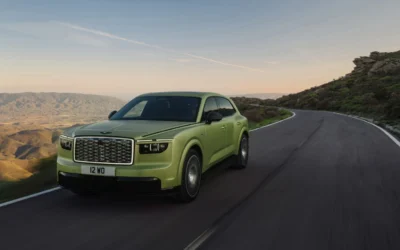

Omoda and JAECOO has confirmed its Super Intelligent Valet Parking system will launch in the UAE later this year, following weeks of public sightings across Dubai.
What did people spot on Dubai’s roads?
Videos circulated on social media showing Omoda and JAECOO vehicles moving through tight spaces and navigating obstacles with little intervention. The sightings spread across shopping malls, business districts, airport approaches and major roads. Motorists filmed the cars and posted the clips online, prompting wide speculation about what the brand was testing.
The company has since confirmed those vehicles were demonstrating its Super Intelligent Valet Parking system, known as SIVP. The feature is being adapted for local conditions ahead of a planned launch on the JAECOO J7 in the second half of 2025. Consequently, what began as roadside curiosity has become an official product announcement.
How does the system actually work?
The SIVP system allows a vehicle to handle parking manoeuvres with minimal driver input. However, the driver remains present and ready to take control at any moment. The system reads surrounding space, detects obstacles and positions the car without requiring the driver to steer.
Omoda and JAECOO says the technology is designed to reduce the stress of parking in busy urban environments. For example, crowded multi-storey car parks and tight kerbside bays are typical scenarios where the system would apply. The brand adds that driver awareness remains a central part of how the system is intended to work.
Was testing carried out in UAE conditions?
According to ZigWheels.ae, the system has been tested in Dubai’s summer heat, with temperatures reaching 50 degrees Celsius. That is a demanding environment for any vehicle technology. Heat affects sensors, processing units and the materials around them, so testing in those conditions is a meaningful step.
The Gulf driving environment also brings specific challenges beyond temperature. Car parks in the region are frequently congested, and stop-start manoeuvring is a regular part of daily driving. As a result, Omoda and JAECOO says the SIVP system has been calibrated with those local conditions in mind.
What does this mean for Omoda and JAECOO in the UAE?
Khaleej Times reported that the UAE will be the first market in the Middle East to receive the SIVP feature. That reflects how central the country has become to the brand’s regional strategy. Omoda and JAECOO says it has already passed 5,000 sales in the UAE and continues to expand its showroom and aftersales network.
Meanwhile, the brand has a broader product programme taking shape alongside the SIVP rollout. The OMODA 4 is due to arrive later this year. In addition, the company is developing its smart-mobility line-up, which includes hybrid systems and robotics-linked technologies. Therefore, the SIVP launch is one part of a wider push across multiple vehicle and technology categories.
Which models will carry the technology first?
The JAECOO J7 is confirmed as the first model to receive the SIVP system in the UAE. However, the company has indicated that its technology roadmap extends across several platforms. The brand’s current UAE line-up includes both the OMODA and JAECOO ranges, which cover SUV and crossover segments.
For example, the OMODA 4 arrival later this year will add another model to a growing local portfolio. Consequently, the SIVP system has the potential to reach a wider range of buyers as the brand expands its product range. Omoda and JAECOO has committed to building aftersales infrastructure alongside its sales growth, which matters for any technology-dependent feature requiring long-term support.