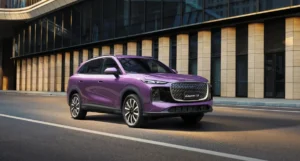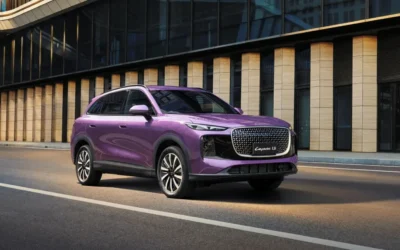

Chinese automaker Rox Motors has begun electric vehicle production in Abu Dhabi, and it plans to unveil its first UAE-designed car in March next year, making it the first Chinese new-energy brand to assemble vehicles in the Emirates.
What has just rolled off the line?
The first three Rox Adamas vehicles carrying a “Made in the Emirates” tag have left the production line at Khalifa Economic Zones Abu Dhabi, known as Kezad. The company confirmed the milestone in a statement.
These are the first Rox cars built inside the UAE. Consequently, the brand now claims a place among carmakers assembling vehicles in the country rather than simply importing them.
Who is behind the new plant?
The facility was built through a partnership between Rox and the state-owned Abu Dhabi Investment Office. Furthermore, it sits within Kezad and covers 10,000 square metres.
The plant enables local sub-assembly of more than 80 types of vehicle components. In addition, it handles complete vehicle assembly, calibration, rain testing, road testing and final inspection before delivery.
How many cars will the factory make?
According to the company, the plant is expected to have an initial production capacity of 20,000 vehicles in 2027. Moreover, that figure is projected to rise to 300,000 a year by 2030. Both numbers are company estimates rather than independent results.
The plant will serve domestic demand while also supporting exports. Therefore, Rox intends to send cars to regional and international markets.
What will the Rox Adamas cost?
The price of the Rox Adamas variants has not been officially disclosed in the UAE. However, various car websites list them at AED230,000 to AED350,000, which works out at roughly $62,600 to $95,300.
The first UAE-designed car is due to be unveiled in March 2027, so buyers will have to wait to see how that model is priced.
Is Rox expanding elsewhere?
In June, Rox Motors announced that it will produce its own branded cars in Egypt. That plan follows an agreement signed with Ezz Elarab and Elsewedy Capital Holding in Cairo.
As a result, the brand is building assembly across more than one market as it grows outside China.
How does this fit the wider push?
Gulf countries have been competing to localise automobile manufacturing for several years. Consequently, several projects are now taking shape across the region.
In 2023, Abu Dhabi launched a centre for smart and autonomous vehicle industries. Officials said it aims to add up to AED120 billion to the UAE economy.
Dubai-based EV maker NWTN completed its full vehicle assembly plant in Abu Dhabi in 2022. That plant has an annual capacity of up to 10,000 semi-knockdown units, meaning partly assembled EVs.
What are neighbouring countries doing?
In Saudi Arabia, Ceer intends to roll its first vehicle off the production line in late 2026. It is the kingdom’s first electric vehicle manufacturer.
The Public Investment Fund and South Korea’s Hyundai Motor Company have also announced plans. Together, they intend to roll out their first Saudi vehicles in the fourth quarter of 2026.
Meanwhile, Qatar-based JTA International Investment Holding said last month that it was working with Britain’s Watt Electric Vehicle Company. The pair plan to set up a factory in the Gulf state.
Why does the Rox launch matter?
Rox has now moved from importing to assembling, and soon designing, cars in the UAE. As a result, the country gains a further foothold in a fast-moving corner of the car industry.
Should the projected capacity figures hold, the plant could grow into a sizeable export base. For now, though, the March unveiling of the first UAE-designed car will be the next test of Rox’s ambitions.