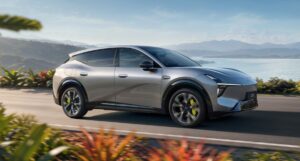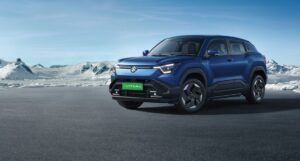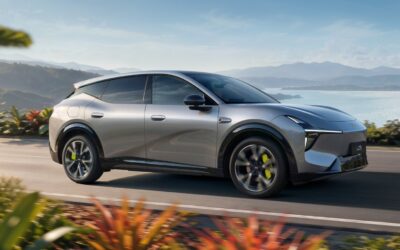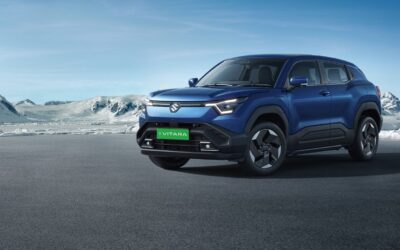

Volkswagen plans to start shipping China-built cars to Mexico, Egypt and Vietnam by the end of 2026. The group has also unveiled VEGA, a technology package developed in China that it wants to use in other markets. South America should be the first region outside China to get that technology, before 2030.
What has Volkswagen announced?
Volkswagen Group China presented VEGA at its first Tech Day in China. The package has three parts: new vehicle platforms, the China Electronic Architecture (CEA) and driver-assistance systems. Volkswagen developed CEA with Xpeng, and five locally built EVs already use it this year.
The two platforms cover different ends of the range. CMP targets compact battery-electric and plug-in hybrid cars, while CSP targets full-size and flagship battery-electric and extended-range models.
Volkswagen Group CEO Oliver Blume described the shift in a statement. “China is a key innovation engine for the Volkswagen Group — and increasingly a product and tech hub for our global markets,” he said.
How far and how fast could VEGA cars charge?
Volkswagen quotes a range of more than 600 km for the most efficient CMP car on China’s CLTC test cycle. That version should use about 11 kWh per 100 km and charge from 30 to 80 per cent in about 25 minutes.
CSP’s numbers are higher. Volkswagen targets more than 800 km for its most efficient battery-electric model, with extended-range versions passing 1,500 km. An architecture above 850 volts should allow a 10 to 80 per cent charge in 13 minutes.
These are manufacturer targets, and real-world results will depend on the car, the charger and driving conditions. Volkswagen plans to introduce the 850-volt technology in 2027, and it has 10 CSP-based products planned, with the first new model around 2028.
Where will the cars go?
China-built Volkswagen and Jetta models already reach the Middle East, Uzbekistan, Kazakhstan and sub-Saharan Africa. Mexico, Egypt and Vietnam are next, followed by more markets in Southeast Asia, South America and Africa.
Europe and North America are excluded from these plans for now. Volkswagen hasn’t said which models will go to the three new markets, or what they’ll cost there.
Why is South America first for the technology?
Exporting finished cars is one part of the plan. The other is using CMP and CEA as the base for next-generation models built for selected Global South markets, with electric, combustion and hybrid powertrains.
South America should come first because it’s a cost-sensitive region where Chinese carmakers already have a strong presence, Cariad China chief executive Frank Han said. South Africa is also under consideration.
Han added that using the technology in Europe is technically feasible. However, he said that decision rests with headquarters in Germany, which would weigh factors including geopolitics.
What does this mean for Volkswagen in China?
The move replaces the group’s earlier “In China, for China” approach. Volkswagen now wants its China business to act as a cost-efficient development and export base, and says local development can cut development time by up to 30 per cent.
Pressure at home helps explain the change. Volkswagen is losing market share in China to rivals including BYD and Geely. Meanwhile, China Volkswagen chief Ralf Brandstätter expects the country’s passenger car market to shrink by 20 per cent this year.
What driver assistance does VEGA include?
Seven new electrified models from Volkswagen’s three Chinese joint ventures will get a system called Hyper Sense 8 this year. It handles navigation on city streets and motorways, plus parking assistance.
Volkswagen also targets Level 3 readiness in 2027, although that’s a future goal and not a capability across its current line-up. Software updates are part of the plan too, with major CEA feature releases every three months.
Safety testing also features in the pitch. One rig simulates road loads equivalent to 15 years or 300,000 km of driving. Volkswagen aims for five-star C-NCAP ratings, although final scores depend on each car.