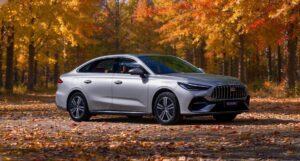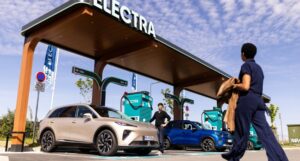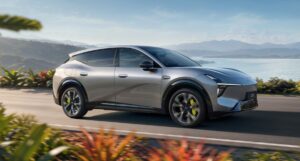

Chinese brands claimed a record 22.5 per cent of Norway’s new car market in October, as registrations hit their highest level for the month in more than 30 years. Electric models made up 98.8 per cent of the 15,725 new cars, according to official data from the Norwegian Road Federation (OFV).
How strong was October for electric cars?
Electric cars accounted for 15,536 of last month’s 15,725 new passenger cars, OFV’s figures show. That’s a share of 98.80 per cent, up from 97.43 per cent a year earlier. It also sits a whisker below September’s all-time record of 98.81 per cent.
Overall, the market grew 41.2 per cent on October 2025. Only 189 new cars had any other powertrain. Among them were 89 diesels and 14 petrol cars, plus 53 petrol hybrids and 33 petrol plug-in hybrids. So far this year, the electric share stands at 98.0 per cent, against 95.2 per cent for the same period in 2025.
Why are Chinese brands gaining so fast?
Chinese brands in Norway took 22.5 per cent of October registrations, up from 16.9 per cent a year ago. That’s their highest monthly share ever, ahead of July’s 22.1 per cent. In real terms, their volume rose from 1,879 to 3,534 cars. Across the year to date, their share has also climbed, to 17.7 per cent from 13.3 per cent.
XPeng led the charge. It finished fifth overall with 932 cars, compared with 376 last October. Its G6 posted its best month of the year with 542 registrations. In addition, BYD added 816 cars, while Changan jumped from 15 to 339. Changan’s Deepal S05 had its best month ever, with 338.
Meanwhile, XPeng has more than doubled its sales this year. With 5,813 cars, it’s now Norway’s sixth-largest brand. For reference, OFV counts 17 brands as Chinese, including BYD, MG, Polestar, Zeekr and Leapmotor. The Norwegian figures follow a wider shift, after Chinese carmakers overtook Japan’s in Europe for the first time.
“More than one in five new cars now comes from a Chinese brand, and the number has almost doubled in a year,” said Geir Inge Stokke, managing director of OFV, in comments translated from Norwegian. “In a short time, the Chinese brands have gone from challengers to a permanent part of the Norwegian car market. The established brands are feeling it.”
Who won the race for first place?
Tesla topped the October table with 1,548 cars and a 9.8 per cent share. That’s 130.7 per cent more than a year earlier and its best October on record. The previous high was 1,348 cars in October 2024.
However, the result came late. Tesla logged only 125 registrations in the first 18 days of the month. Then, between 26 and 31 October, it added 1,074 cars, which OFV says was almost one in five new cars in that window.
Toyota finished just 55 cars behind with 1,493, up from only 62 a year ago. Volkswagen came third with 1,308. In total, eight of the ten biggest brands grew. By contrast, Volkswagen fell 16.4 per cent and Volvo dropped 27.0 per cent.
“Only 55 cars separated the two largest brands in October,” Stokke said. “The fight at the top is close, and buyers have many new brands and models to choose from.”
Which models led the charts?
The Tesla Model Y was the most popular model, with 1,429 registrations. The Toyota bZ4X came second on 725, followed by the Volkswagen ID.4 on 553.
Notably, three of the top ten models had no registrations in October last year: the Mercedes-Benz GLC on 508, the BYD EVO 4×4 on 437 and the Toyota Urban Cruiser on 415. The Changan Deepal S05, also new, came 11th.
New arrivals shaped the wider market too. Three in ten new cars, or 4,796, were models absent from last October’s figures. For example, Subaru went from zero to 306 cars across the Uncharted, E-Outback and Solterra. Suzuki rose from six to 227, almost all of them the e Vitara. Leapmotor, also missing a year ago, recorded 84 C10s. Likewise, Toyota’s jump is partly due to the new Urban Cruiser and the C-HR+, which added 299.
Could 2026 become a record year?
It’s on course. Norway has recorded 130,921 new cars so far this year, up 5.2 per cent. If buyers register about 48,600 more in November and December, 2026 will beat the 2025 record of 179,550. For context, the same two months last year delivered 55,087 cars.
Tesla leads the year with 21,523 cars and a 16.4 per cent share, although its volume is down 3.9 per cent. Toyota is second on 14,126 after a 79.7 per cent rise. Volkswagen sits third with 12,096, down 26.7 per cent. Meanwhile, the Model Y has 17,647 registrations, more than three times the bZ4X’s 5,570.
What does this mean for Norway’s car fleet?
By 31 October, Norway had 1,062,008 electric passenger cars on its register. That’s 36.1 per cent of all passenger cars, so electric is now the largest fuel group. Diesel follows on 29.2 per cent, with petrol on 22.5 per cent.
Stokke also pointed to the cars already on the road. “Only 103 of more than 15,700 new cars in October ran on petrol or diesel, and 2026 looks set to be a new record year,” he said. “Even so, nearly two in three cars on Norwegian roads still aren’t electric. If road traffic emissions are to fall, the older cars must also be replaced.”