
Stellantis has shown six concepts in Paris on the eve of the motor show. The standout is an electric Citroën 2 CV Concept, which the group says will cost about €15,000. However, there’s no delivery date yet, and the wider line-up still leaves plenty of room for combustion engines.
What did Stellantis show in Paris?
Stellantis unveiled the six studies in Paris on 11 October 2026, a day before the Paris Motor Show. At the show itself, the group plans to display more than 60 vehicles. Each concept comes from a different brand: Peugeot, Citroën, Fiat, Opel, Alfa Romeo and DS Automobiles.
Together, they outline how those brands could evolve under FaSTLAne 2030, the group’s strategic plan. According to Automotive World, the mix of hybrid and electric cars shows a group hedging its bets. In other words, Stellantis isn’t sure how fast Europe will electrify, so it’s preparing for several outcomes.
Why is the Citroën 2 CV Concept the most important?
Of the six, the Citroën 2 CV Concept sends the clearest commercial signal. It’s a fully electric car, built in Europe, with a price of about €15,000. That figure is Stellantis’s own estimate, though, and no independent pricing exists yet.
At that level, the car would sit at the entry point of Europe’s electric car market. That’s the segment where cost weighs most heavily on buyers. Moreover, the price suggests Stellantis wants to take on low-cost Chinese EVs directly. Automotive World also notes that the group’s Leapmotor partnership could serve as a fallback if European production costs fall short.
Still, plenty remains unknown. Citroën has only said a production model should join its range by 2028. Likewise, it hasn’t shared range, battery size, motor power or charging speeds. So, for now, the car is a price target attached to one of Citroën’s most famous names.
Which concepts point closest to production?
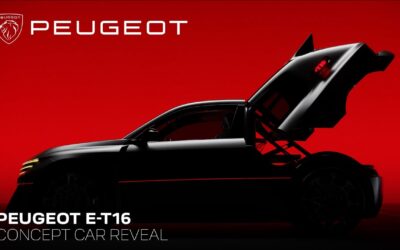
Meanwhile, other concepts look closer to the road. Peugeot’s electric RCZ Vision sits on the STLA One platform and uses steer-by-wire. With that system, electronic controls replace the mechanical link between the steering wheel and the front wheels.
Renault has shown the same idea on its E-Space concept. As a result, Automotive World suggests French carmakers see by-wire steering as a near-term way to stand out. However, production timing for the technology remains open.
Opel, for its part, said its STX estate carries design cues destined for future models. These include the Vizor lighting signature that frames the front of the brand’s cars. Opel hasn’t published technical details for the STX, so its powertrain remains unclear.
Why is combustion still in the picture?
Notably, the line-up keeps combustion in play. The Alfa Romeo Cuorerosso pairs a full-hybrid 2.9-litre V6 with Q4 all-wheel drive. That’s a striking choice, since Alfa Romeo was once set to go all-electric by 2027.
Automotive World links the shift to expected flexibility in EU CO2 rules. In turn, that flexibility is reopening combustion options across Stellantis brands. Consequently, the group’s earlier EV-only pledges now look more like multi-energy plans.
Fiat’s Multiplay, meanwhile, blends pickup and SUV formats on a configurable layout. Its inspiration is the Multipla, Fiat’s famously unconventional people carrier. Stellantis hasn’t detailed the Multiplay’s powertrain, though. Similarly, the DS Automobiles study arrived with few published details.
How do the concepts fit Stellantis’s 2030 plan?
The concepts support a plan for more than 50 launches by 2030. According to Emanuele Cappellano, Chief Operating Officer for Enlarged Europe, that push would widen the group’s market coverage in Europe by 25%.
In a statement, Cappellano said: “Stellantis is deeply rooted in Europe and holds a leading position that will be strengthened by the success of all our brands.”
In short, Stellantis is spreading its bets. Electric cars sit alongside hybrids, and design studies sit alongside hardware that looks close to production. For a group with so many brands, that approach lets each one target a different kind of buyer.
What should buyers watch for next?
For now, these remain concepts. Stellantis hasn’t given firm launch dates for the six, and it hasn’t published full technical specifications. Therefore, the €15,000 figure for the 2 CV should be treated as a manufacturer estimate until the car reaches showrooms.
Even so, the number is important. Affordable electric cars remain scarce in Europe, and price is often the main barrier for buyers. If Citroën can build the 2 CV in Europe at that cost, it could set a benchmark for its rivals.
Next, the Paris Motor Show should offer a closer look at all six cars. After that, the key questions are simple. When will the 2 CV arrive, how far will it go on a charge, and will the final price hold? Until Stellantis answers them, the concept is a statement of intent.