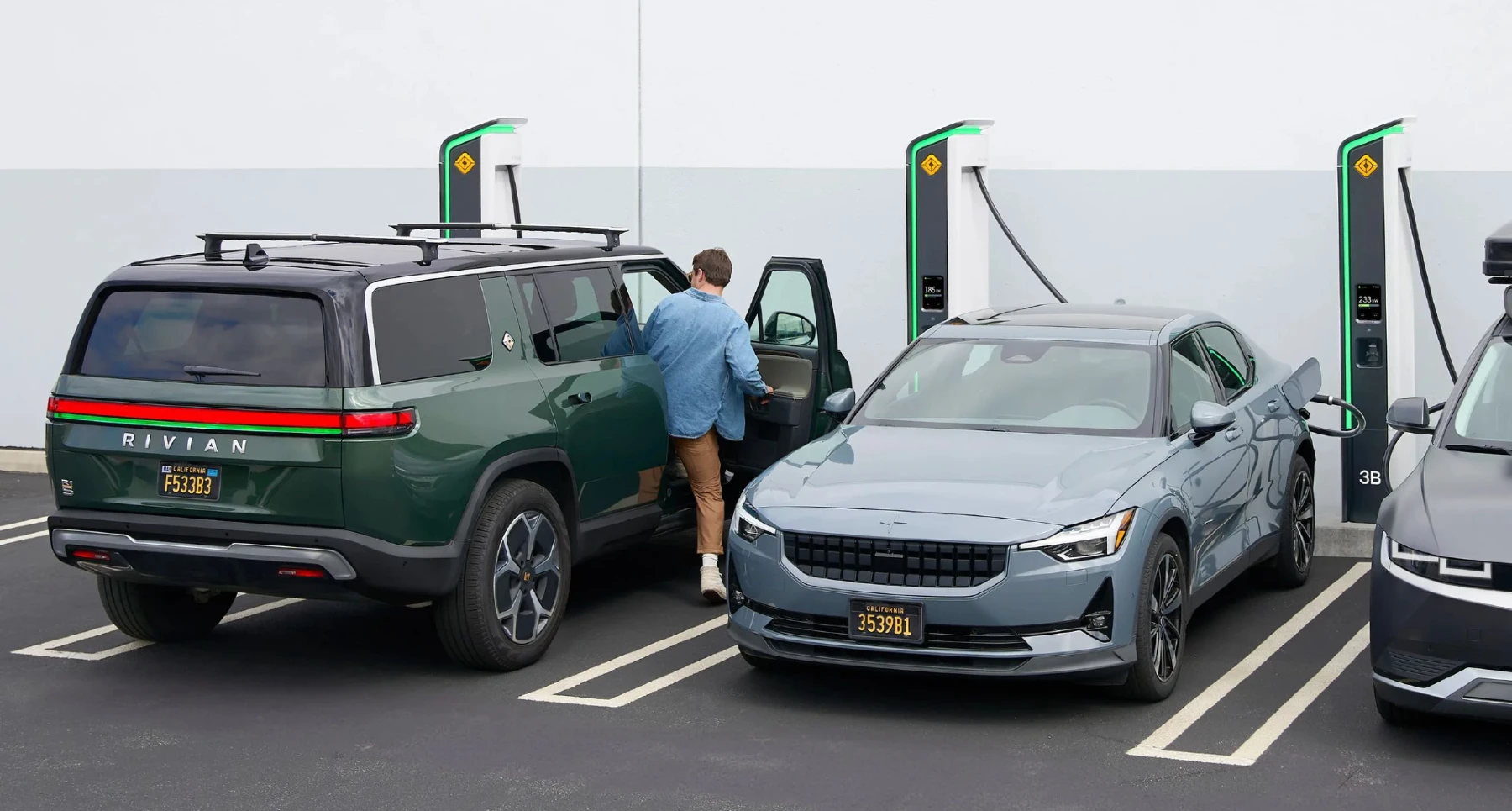
Rivian has grown its Adventure Network to over 1,000 DC fast-charging stalls, with a clear push towards open access and a new connector standard.
How big is the Rivian Adventure Network now?
Rivian’s proprietary charging network has passed 1,000 direct-current ports across the United States. Data from the US Department of Energy’s Alternative Fuels Data Center shows the Adventure Network now covers 148 locations. Four new sites opened in the past month alone.
The network launched in 2021 to support long-distance travel for Rivian owners. Since then, it has grown steadily in both scale and reach. That pace of expansion shows the company is treating charging infrastructure as a core part of its product, not an afterthought.
Who can use the Adventure Network today?
The Adventure Network has become increasingly accessible to drivers of other electric vehicles. One industry tally puts nearly all of the network’s locations within reach of non-Rivian vehicles. Consequently, the system now functions more like a public charging network than a private one.
Rivian’s own expansion plans have always pointed in this direction. When the company first outlined the Adventure Network, it set a long-term goal of more than 3,500 DC fast chargers across North America. The 1,000-port milestone shows real progress towards that figure.
What is changing with the connector standard?
Rivian is converting the Adventure Network to the North American Charging Standard. According to Rivian, 166 stalls at 50 locations now carry NACS connectors. Six of those sites run entirely on NACS hardware, with no legacy equipment remaining.
The conversion process began in mid-2025. Early upgrades went in at high-profile destinations such as Joshua Tree. Meanwhile, other locations are receiving NACS connectors alongside existing CCS equipment, giving drivers on both standards access during the transition period. Rivian continues to retrofit older sites as the roll-out advances.
How does Rivian manage the network day to day?
Rivian connects the charging network directly to its own software. Drivers can check station availability through the mobile app and through the in-vehicle navigation system. As a result, finding a free stall takes little effort for those in a Rivian vehicle.
Reliability has become as much a focus as growth. Rivian says the Adventure Network has maintained 98 per cent uptime in 2025. For EV drivers, that figure carries real weight. A fast-charging network is only useful when the hardware actually works, and Rivian’s reported uptime rate is high by industry standards.
What does this mean for EV drivers in practice?
For Rivian owners, the expanding network means more charging options on long routes. For drivers of other EVs, the growing number of NACS-compatible stalls adds another usable network to the map. In addition, the continued opening of new sites brings the Adventure Network closer to the coverage levels that established networks have built over many years.
The shift to NACS also has broader significance. The standard has gained wide industry support across North America. Therefore, Rivian’s adoption of it connects the Adventure Network to a much larger ecosystem of compatible vehicles. Drivers buying a new EV today can reasonably expect that list of compatible vehicles to grow over time, making the Adventure Network more useful with each passing year.