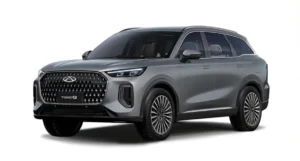

EXEED has dispatched eight test cars to Saudi Arabia to validate its Valet Parking Driver technology in extreme summer heat, ahead of a global debut on the ET 2026 model.
What has EXEED sent to the Gulf?
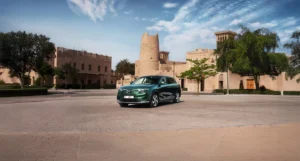
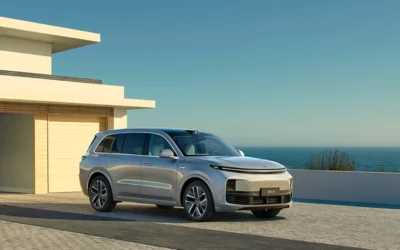
On 23 July, eight test cars fitted with EXEED’s Valet Parking Driver, or VPD, technology set off for Saudi Arabia. According to the company, they will undergo local validation in August across Saudi Arabia and the United Arab Emirates.
The trials focus on high temperatures and complex road conditions. EXEED, a premium brand from Chinese carmaker Chery, wants to show that the system holds up in demanding Gulf conditions before customers can use it.
Why does the heat matter so much?
Summer in Saudi Arabia is punishing. EXEED says July and August temperatures often reach between 40C and 50C or higher. Ground temperatures, meanwhile, can approach around 70C.
Multi-storey car parks trap that heat. As a result, walking to a distant parking spot at midday becomes uncomfortable and tiring. EXEED frames its technology as a way to keep drivers out of that heat.
How does the VPD system work?
The system includes a function EXEED calls One-Touch Recall. Using an app, a driver can summon the car while waiting somewhere cool, such as a hotel lobby.
According to the company, the car then navigates out of its space on its own. Furthermore, it can do so from deep within a multi-level structure before pulling up where the driver waits.
EXEED also says the cabin arrives pre-cooled to a preferred temperature. In effect, the aim is to cover the short trip from indoors to inside the car without exposure to the heat outside. These claims are the manufacturer’s own description and not an independent test result.
Where will the technology appear first?
EXEED plans to launch VPD globally on the ET 2026 model. The company points to dense commercial districts in Dubai and the Corniche in Abu Dhabi as settings where the feature could help.
The source does not state range, power, charging speed or pricing for the ET 2026. Those figures were not provided, so they cannot be confirmed here.
What does this say about localisation?
Chinese new-energy brands are adapting their cars for specific conditions abroad. Testing in Gulf heat is one example, since the region’s summers push both cars and electronics hard.
EXEED describes VPD as a shift from parking as a chore towards a service the car manages. Moreover, the company positions the technology as part of a premium ownership experience.
Heat validation is a common step before rollout. Therefore, the August trials should indicate whether the system behaves as promised once temperatures climb.
What happens next?
The August programme in Saudi Arabia and the UAE will run the eight cars through local conditions. Afterwards, EXEED intends to bring VPD to market on the ET 2026.
For now, the trials remain the main development. Independent verification of the heat performance and the driving claims will matter once the feature reaches customers.