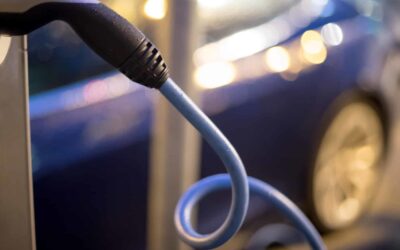

Saudi Arabia’s EV charging network is expanding fast, and Lucid’s latest rollout shows how quickly the market is maturing.
Lucid has put more than 100 free AC chargers into service across Saudi Arabia. The American luxury brand is building its physical presence in the Gulf region. Charging infrastructure is spreading across the Kingdom’s major urban centres. As a result, electric vehicle ownership is becoming a practical daily reality for more drivers.
Why does free charging matter to drivers?
Free public charging changes how people think about electric vehicles. Kia Saudi Arabia confirms that workplaces, shopping centres, supermarkets, cinemas, and public car parks now provide charging points. In many cases, drivers can plug in at no cost. However, most EV owners in Saudi Arabia still prefer charging at home. The economics of home charging are simpler and more predictable. For drivers weighing a switch to electric, that combination works well. Lower running costs and reduced fuel anxiety both follow from access to convenient charging options.
The Lucid chargers join a network that already includes thousands of charging points. Riyadh, Jeddah, and Dammam all have significant existing infrastructure. Availability remains concentrated in cities for now. Therefore, rural and intercity charging still requires attention from infrastructure providers.
What is Saudi Arabia building for the longer term?
The scale of planned investment is considerable. Reuters has reported that the Electric Vehicle Infrastructure Company is targeting 5,000 fast chargers across 1,000 locations by the end of the decade. That company is a joint venture between Saudi Arabia’s Public Investment Fund and Saudi Electricity Company. Consequently, the Kingdom has committed substantial institutional capital to EV charging expansion. That target would give Saudi Arabia one of the denser fast-charging networks in the region.
Lucid’s 100-plus chargers are one piece of a much larger picture. Meanwhile, other providers are adding capacity of their own. Kia offers ultra-fast charging options in Saudi Arabia and the UAE. Kia dealership charging is also available to owners. In addition, Kia’s roadside assistance programme includes portable emergency charging support. Drivers who run low away from a fixed charger therefore have a safety net available to them.
Why is Saudi Arabia a priority market for Lucid?
Lucid has a clear commercial interest in Saudi Arabia. The Public Investment Fund has backing ties to the brand. Saudi Arabia’s high-income consumer base responds well to premium electric vehicles. For example, a luxury EV priced above mass-market alternatives finds a more receptive audience in Saudi Arabia than in many other markets. As a result, Lucid’s expansion here carries both strategic and financial logic.
The brand is also building retail and service infrastructure alongside its charging rollout. That approach gives buyers confidence that support exists after purchase. However, charging provision alone does not complete the picture. Service coverage, parts availability, and software support all shape the ownership experience.
How close is Saudi Arabia to everyday EV adoption?
The gap between early adoption and mainstream use is closing. Infrastructure is growing, free charging is available in many public spaces, and home charging remains the primary option for most owners. In addition, major institutions are backing long-term network expansion with clear targets. Consequently, the conditions for broader EV uptake are falling into place.
The 5,000 fast-charger target from the Electric Vehicle Infrastructure Company gives the market a concrete milestone to measure progress against. Lucid’s rollout adds to the momentum. However, city concentration remains a real constraint. Drivers outside major urban areas still face more limited options. Therefore, the next phase of growth will depend on how quickly infrastructure reaches secondary cities and highways.
Saudi Arabia is moving at pace. The combination of sovereign investment, international brands, and rising consumer interest is reshaping what electric driving looks like in the Kingdom. For anyone watching the Gulf’s EV market, the infrastructure story is no longer theoretical. It is already on the ground.