
Volkswagen is preparing what insiders describe as far more than a routine update for its popular electric SUV, with a new name, a new look and a new approach to the driving experience all on the way.
What’s actually changing?
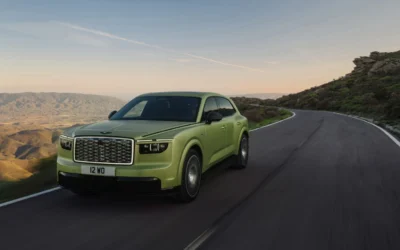
The revamp touches almost every part of the car. At the front, sharper headlamp clusters linked by a full-width LED element give the crossover a squarer, more assertive face, bringing the ID.4 visually into sync with the new Tiguan and Volkswagen’s upcoming electric ID.Cross. New door handles replace the flush-mounted items, and the rear has been reshaped with a concave tailgate panel and a re-profiled D-pillar.
The interior is where many owners will feel the difference most. Physical buttons and switches will feature prominently, including a real volume knob, alongside a new dashboard, better materials and a revised user interface. That is a direct reversal of the touch-first philosophy that frustrated many early ID.4 buyers. The software also gets attention, with a larger digital gauge cluster and an improved AI-powered voice assistant.
Under the skin, Volkswagen is updating the MEB platform, with new cell chemistries expected across the range. Lithium iron phosphate batteries are anticipated for some variants, which should improve longevity and reduce costs, while higher-energy options will remain available for longer-range versions. Volkswagen’s Brand CEO Thomas Schäfer confirmed at the Volkswagen Group Product and Technology Update in September 2025 that the company is targeting ranges of over 700 kilometres for the ID.4 and the Enyaq.
Battery preconditioning, smarter climate management and high-definition matrix headlights with lane-projection capability are among the convenience features being added, according to multiple trade reports.
Is the ID.4 getting a new name?
The biggest talking point may not be a technical one. Reports indicate the updated model will carry the Tiguan nameplate, with the change forming part of Volkswagen’s effort to make its EVs more recognisable and appealing to mainstream buyers. The Tiguan has been in production for nearly two decades and carries significant brand loyalty in markets across Europe and North America.
The ID. Tiguan is expected to debut in late 2026, with sales beginning early in 2027. Production will take place at Volkswagen’s Emden plant in Germany, while the Zwickau factory, where the current ID.4 is built, will transition to other models.
Volkswagen’s development boss, Kai Grünitz, has been direct about the ambition behind the changes. “We will bring a re-skin for the ID.4 and ID.3, with a completely new design language going back to where we originally came from, from a design perspective, and return to what Volkswagen is known for,” he told Auto Express. Grünitz has also described the revisions as far more than cosmetic, citing significant gains in battery costs and performance, and has promised what he calls “a huge improvement” for the electric duo.
Schäfer was equally candid during the brand’s annual media call on 12 March 2026. “I can only say without a doubt that that car specifically is going to be amazing. It needed a revamp, a couple of things that we should have done in the first place, but sometimes it takes a while to get things done,” he said of the incoming model.

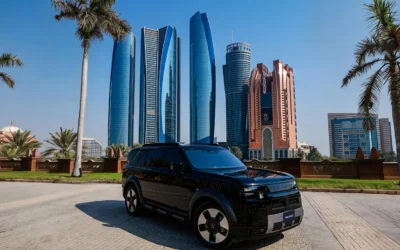
The current ID.4 Pro.
How is Volkswagen performing in Europe?
The overhaul arrives as Volkswagen consolidates a dominant position in the European EV market. Volkswagen replaced Tesla as the best-selling electric car brand in Europe during the first half of 2025, with strong gains driven by the ID.4, ID.7 and ID.3.
The Volkswagen Group delivered 983,100 electric vehicles worldwide in 2025, nearly a third more than in 2024. In Europe, deliveries increased by 66 per cent to 742,800 units. That growth came despite a broader contraction in the European new car market.
The Group’s share of the European BEV market has been substantial for several years. Oliver Blume, Chief Executive of the Volkswagen Group, said in early 2025: “In the all-electric vehicle segment, the Volkswagen Group is by far the market leader in Europe. This makes us proud and at the same time spurs us on.”
JATO Dynamics data showed the Group reaching a three-year high European market share of 27.6 per cent in October 2024, with electric vehicles playing a central role in that performance.
Schäfer set out the scale of Volkswagen’s EV ambitions for the year ahead. “2026 will be a strong year for Volkswagen. In Europe alone, we will present six world premieres and, most importantly, we are bringing affordable electric entry mobility,” he said at the March 2026 annual media call.
Should you wait for the new model?
If you are in the market for an electric SUV now, the current ID.4 remains a competitive option, particularly following recent software and powertrain improvements. However, the incoming update is substantial enough that waiting is a reasonable choice for buyers who are not in a hurry. The design refresh alone brings the car closer to Volkswagen’s mainstream SUV family, and the return of physical controls addresses the single most consistent criticism of the ID generation.
Volkswagen has not confirmed final specifications, pricing or precise on-sale dates by market. EVLife will report further details as the official reveal approaches.