
Drive EV’s first month of platform data shows what UAE drivers now want, and the established luxury badges barely feature.
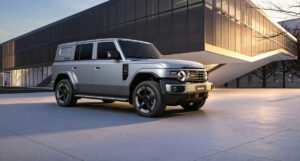
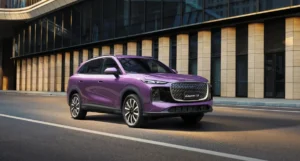
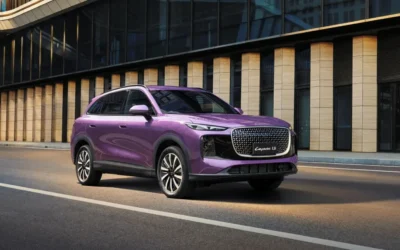
The most clicked car on Drive EV’s platform is the Jaecoo J7 SHS. It’s a plug-in hybrid SUV from a Chery sub-brand, and it launched here last October at AED 99,900. For under AED 100,000, it gives a claimed 90km of electric range and over 1,200km combined. Tesla and the older luxury names sit well behind it.
That result shows how far the UAE’s electric shift has moved. Drive EV‘s first month of data paints a market that looks little like the showroom floor of five years ago.
Has BYD Already Won the UAE?
On brand interest, the gap is wide. BYD scores 224 on the platform’s affinity index. The score is relative rather than capped at a fixed maximum. It simply ranks brands against each other. BYD’s total is more than double second-placed MG, on 108. Jaecoo, Aito and Lynk & Co complete the top five, and the entire top ten is Chinese-owned.
Tesla, by contrast, scores just 42, less than a fifth of BYD’s total. The wider numbers support the trend too. Last year the UAE became one of China’s fastest-growing EV export markets, taking around 192,000 vehicles. So what the platform shows is demand catching up with that supply.
Ian Lewis, founder of Drive EV, says the market has moved past the basic question of adoption. “The GCC EV market is reaching a pivotal moment,” he says. “The conversation is no longer simply about whether consumers will adopt electric vehicles. That shift is already well underway.”
Why Are Hybrids Beating Pure Electric?
The most revealing finding sits in the powertrains. The two most engaged models are both plug-in hybrids, while pure EVs come further down. The Jaecoo J7 SHS leads, and the BYD Qin Plus DM-i follows close behind. Therefore, buyers are clicking most on cars that still carry a petrol engine.
The reason is explained to a large extent by people’s housing situation. Around two-thirds of platform users live in apartments, where fitting a home charger is difficult or impossible. Without a wallbox in the basement, a pure EV means a public charger for every top-up. A plug-in hybrid removes that worry, because you charge when you can and refuel when you can’t.
As a result, the cars gaining the most attention are the ones that fit how people actually live.

The BYD Qin Plus comes second in the overall most-viewed cars on the Drive EV platform.
What Factors Are Most Important for UAE Buyers?
Buyers now lead with their wallets. Lowest cost to own is the single biggest purchase factor at 32%. Real-world range then comes second at 25%, and premium comfort and interior third at 16%.
That focus on cost has a backdrop. The war in the Middle East has pushed energy and commodity prices higher. The World Bank expects energy prices to climb about 24% in 2026, their highest level since 2022. As prices rise and uncertainty lingers, buyers weigh a car’s running costs even more carefully.
Range still weighs heavily, yet driving habits tell a different story. About 82% of users drive under 150km a day, and 42% stay under 80km. In addition, half rarely travel between emirates at all. For these distances, almost any modern EV would last several days between charges. So the worry is genuine, even though the driving behind it is short. It’s a habit that lingers from petrol days, when a low tank meant a quick detour to the station.
For Lewis, that gap points to what buyers really need. “Consumers today want far more than technical specifications,” he says. “They want transparency, real-world usability insights, and confidence that they are making the right decision for their lifestyle and driving needs.”
Where Did the German and Japanese Giants Go?
The brands that once defined UAE roads now rank far lower. BMW, the strongest Western performer, manages only 56 on brand affinity score. Mercedes-Benz and Toyota score just 17 each, and Land Rover only 10.
The reason is value. The J7 SHS undercuts a Toyota RAV4 Hybrid while offering more electric range and a longer warranty. Because the more affordable car also feels newer inside, badge loyalty starts to look expensive.

Two-thirds of the people looking for EVs from the sample live in apartments.
What Kind of Car Does the UAE Actually Want?
A clear picture emerges. Three-quarters of Drive EV users want an SUV. Yet among those buyers, only 29% require all-wheel drive. So the appetite is for the high-set, spacious SUV shape rather than off-road hardware.
In addition, most buyers keep it practical. Some 74% need only four or five seats, so compact and mid-size crossovers fit better than seven-seat giants. On budget, nearly half want to spend under AED 100,000, and roughly 70% under AED 150,000. Only one in twenty shops above AED 300,000. As a result, the UAE EV story has shifted from flagship to value.
Choice is widening fast. “The real challenge now is helping buyers make confident, informed decisions in a market evolving at extraordinary speed,” says Lewis. “As vehicle choice expands rapidly across established and emerging brands, trusted and independent buyer intelligence becomes increasingly important.”
Are People Ready to Buy or Just Browsing?
This audience is ready to act. Some 44% of users say they’re ready to buy now, and 74% intend to within three months. Only one in seven is still researching.
The data sample is obviously confined to Drive EV users, who are actively comparing models and who appear to be more price conscious. But put together, the message to carmakers is blunt. The UAE wants an affordable SUV, ideally a hybrid that doesn’t need a home charger. Five seats and a sensible price complete the brief. For now, a handful of Chinese brands build exactly that, while everyone else is still competing in yesterday’s market.
Finally, Lewis believes the next phase will turn on information as much as machinery. “We believe the next phase of EV adoption in the UAE and wider GCC will be shaped not only by the manufacturers entering the market, but by the quality of information and guidance available to consumers,” he says. Precisely the service that he’s set out to offer through Drive EV.