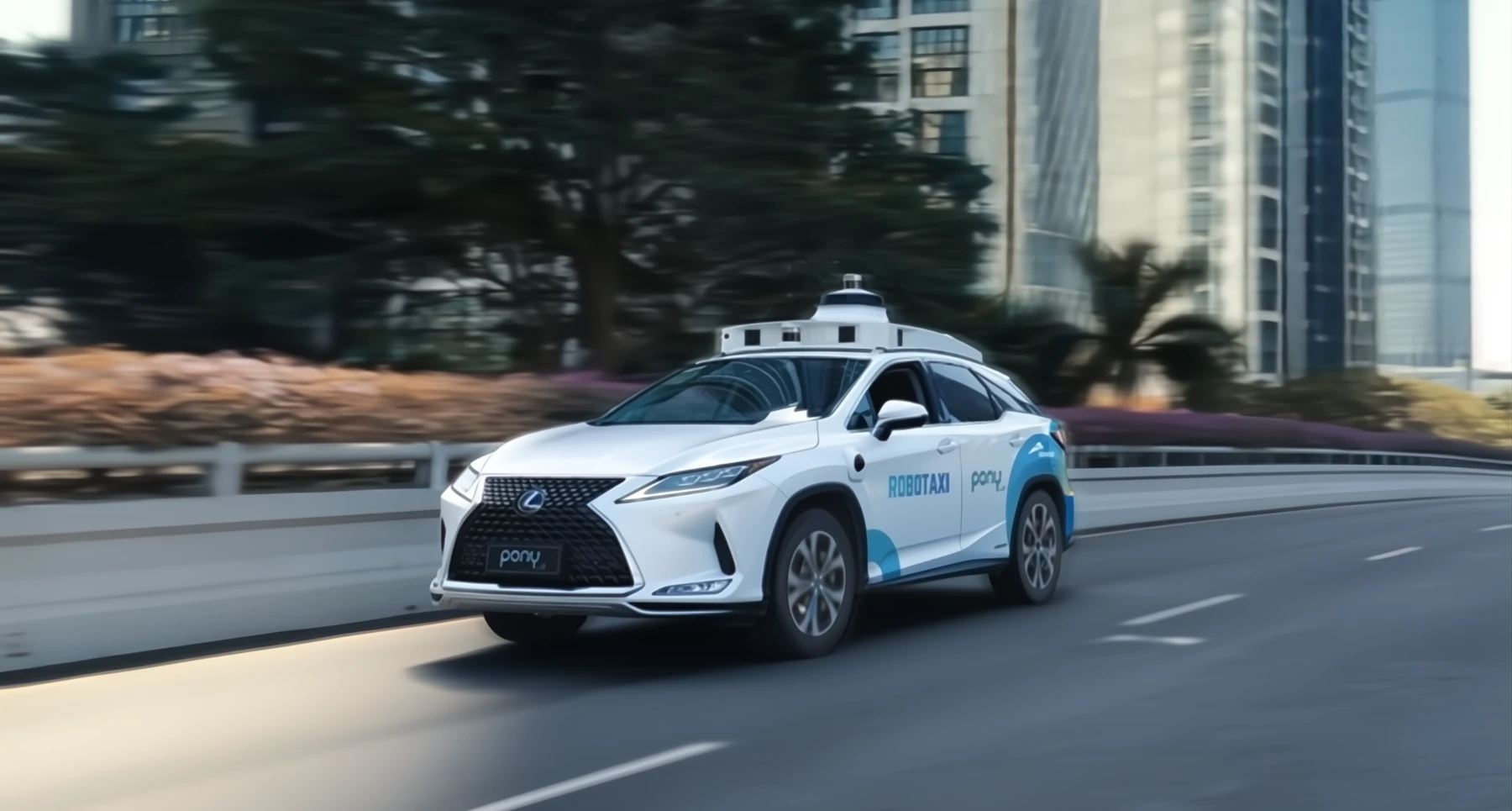
Pony.ai has begun fully driverless robotaxi trials in Dubai, marking a significant step toward fare-paying commercial services in the emirate. The Chinese autonomous driving company is targeting a commercial launch in the second half of 2026, following months of on-road validation and a public-road testing permit granted by Dubai’s Roads and Transport Authority in September 2025.
What is Pony.ai doing in Dubai?
The trials place entirely driverless vehicles on Dubai’s public roads, with no safety operator behind the wheel. This moves the programme beyond supervised testing into something closer to a genuine commercial operation. Pony.ai founder and chief executive Dr James Peng described Dubai as a milestone in the company’s global commercialisation plans. He stated that the aim was to offer safe, reliable autonomous transport to more people in the emirate.
The timing aligns with Dubai’s own policy ambitions. The city has set a target for autonomous mobility to account for a quarter of all trips by 2030, as part of its broader smart city strategy. That political commitment gives companies such as Pony.ai a clear and stable regulatory environment in which to operate. For residents and visitors, the trials signal that autonomous transport is moving from occasional demonstration toward something bookable on demand.
How ambitious is Pony.ai’s global expansion plan?
Dubai is one piece of a much larger picture. Pony.ai has stated it wants a fleet of more than 3,000 robotaxis operating across more than 20 cities by the end of 2026. Overseas markets are expected to account for roughly half of that total fleet. To reach that target, the company needs to grow from approximately 961 robotaxis to beyond 3,000 within that timeframe, having previously aimed to reach around 1,000 vehicles by the end of 2025.
That pace of expansion reflects a deliberate push to turn robotaxis into a commercial business at scale. Pony.ai is not treating this as a long-term research project. The company is actively building the commercial infrastructure needed to generate revenue from autonomous rides across multiple international markets simultaneously.
How does Pony.ai structure its international operations?
Rather than managing every aspect of its operations independently, Pony.ai works through a partnership model. The company supplies autonomous driving software and vehicle production expertise. Local partners then fund fleets and handle day-to-day operations in each market. This approach allows Pony.ai to expand quickly without bearing the full capital cost of fleet ownership in every city it enters.
Existing partnerships include Uber, Toyota, Chenqi Mobility, ATBB, and Verne in Croatia. Each relationship reflects a different aspect of the company’s strategy, whether that involves ride-hailing integration, vehicle manufacturing, or local operational support. The partnership structure is particularly relevant in international markets, where regulation, road conditions, and consumer expectations differ considerably from those in China.
Will riders in Dubai trust a driverless car?
That question sits at the centre of Pony.ai’s commercial ambitions in the emirate. The technology may be ready. The regulatory framework is in place. The harder challenge is consumer behaviour. Riders need to feel comfortable choosing a vehicle with no human driver for everyday journeys, not just as a novelty experience.
Dubai’s demographic mix, its high volume of tourists, and its existing appetite for technology-forward services may work in Pony.ai’s favour. The city has a track record of adopting new transport formats relatively quickly. Even so, converting trials into a steady stream of paying passengers requires more than a functioning autonomous system. It requires trust built through consistent, safe performance over time.
What does this mean for the wider autonomous vehicle industry?
Pony.ai’s Dubai deployment adds momentum to a global shift in autonomous vehicle development. Several companies are moving from extended testing phases into early commercial operations. The focus is increasingly on proving that driverless services can generate real revenue, not just favourable headlines.
For the electric vehicle sector, the intersection of autonomous driving and electrification matters. Most robotaxi platforms, including Pony.ai’s, are built around electric vehicles. As fleets scale into the thousands, the charging infrastructure, battery management, and energy costs become central to whether the economics of autonomous ride-hailing actually work. Dubai’s 2026 commercial launch, if it proceeds as planned, will offer a meaningful data point on all of those questions.