
Ford says its EV batteries are holding up well. It has published battery health data from more than 36,000 Mustang Mach-E cars. Across its electric line-up, batteries average more than 90 per cent health after 100,000 miles.
What did Ford find?
The numbers come from Ford’s own connected-vehicle data. The company analysed every 2021 model-year Mustang Mach-E sold in the US and Canada, which is more than 36,000 vehicles. Together, those cars have covered two billion miles, roughly 3.2 billion km.
The Mach-E was Ford’s first mass-produced modern electric vehicle, and the first examples reached customers more than five years ago. According to Ford, the 2021 cars have kept 92 per cent of their battery health on average. Owners have had them for an average of 5.2 years.
The wider picture looks similar. The figure covers Ford’s full battery-electric line-up in the US and Canada. Packs there average more than 90 per cent health at 100,000 miles, about 161,000 km. That line-up includes the F-150 Lightning pickup and E-Transit van. However, the broader figure comes from a separate Ford field study, and the company hasn’t published the detail behind it.
How consistent are the results?
Ford says 95 per cent of the 2021 cars sit between 87 and 97 per cent battery health. In other words, few owners appear to be living with a badly worn pack. “The number I look at closely is the spread,” wrote Kevin Vander Laan. He is Ford’s technical leader for high-voltage battery cells and systems.
The high-mileage cases are also telling. More than 2,000 of those owners have passed 100,000 miles on their original battery. Their packs average better than 91 per cent health, Ford says. Meanwhile, more than 30 drivers have crossed 200,000 miles, about 322,000 km, and still average 88 per cent.
One driver has gone much further. David Blenkle runs a small private ride service in Santa Cruz, California. He has passed 400,000 miles on the original battery of his 2022 Mach-E.
For context, battery health describes how much usable capacity remains compared with a new pack. A car at 88 per cent should offer close to 88 per cent of its original range.
How much weight should these figures carry?
These are Ford’s own figures, and no independent body has checked them so far. Ford says the data reflects usable battery capacity as of August 2026. It draws on aggregated, anonymised data from connected vehicles. However, the company hasn’t published its full method.
Still, the sample is large. Two billion miles of customer driving is a sizeable data set, covering commuting, road trips and fleet use. The detailed findings apply to one model, though. Ford says the 2021 Mach-E is its only modern EV group with five full years of driving at this scale.
The findings could also be important for the used market. Battery worries often weigh on second-hand EV values. As a result, evidence of slow degradation may reassure buyers weighing up an older electric car.
How can owners keep their battery healthy?
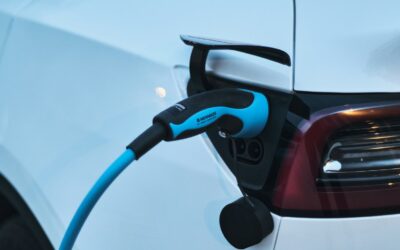
Alongside the data, Ford shared some everyday advice. First, it suggests charging at home on a Level 2 charger for daily driving. It recommends saving DC fast charging for the days you need it.
Temperature is a factor too. Ford advises owners to manage temperature extremes where they can. Preconditioning the car while it’s still plugged in helps. Likewise, parking in the shade in summer can limit long-term wear.
Chemistry also changes the advice. The 2021 Mach-E uses an NCM battery, which generally doesn’t need frequent full charges for daily use. However, some newer Ford EV batteries use lithium iron phosphate, or LFP, cells. Those benefit from an occasional charge to 100 per cent, which helps the battery management system stay calibrated.
Finally, the Ford App offers charge-level recommendations tailored to each vehicle and battery system.
What comes next for Ford’s EVs?
Ford says it’s feeding this field data into future models, including its Universal Electric Vehicle platform, known as UEV. The first UEV model is the Fathom, a midsize electric pickup. Ford plans to open pre-orders in early 2027, with prices starting at $28,350.
In the meantime, the 2027 Mustang Mach-E is on sale in the US from $39,995. It drops the previous standard-range battery and comes with an 88 kWh pack as standard. The rear-wheel-drive version carries an EPA-estimated range of up to 320 miles, about 515 km. That’s an official US estimate, so real-world range will vary with weather, speed and driving style.
Ford’s data is one of the larger real-world records of EV battery ageing. Independent studies will show whether other fleets follow the same slow decline.