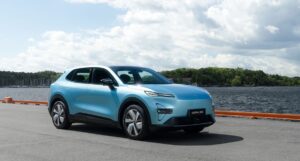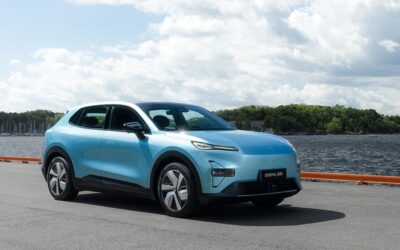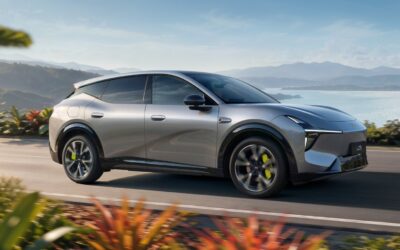

Methanol, petrol or electricity: the Galaxy Xingyao 6 EF can run on any of them, and Geely has now put it on sale in China. The carmaker calls this methanol hybrid sedan the world’s first production methanol hybrid family car, with subsidised prices starting at 76,800 yuan.
What has Geely launched?
Geely Auto unveiled the Xingyao 6 EF in Shenyang, Liaoning province. The sedan belongs to the company’s Galaxy sub-brand. Owners can mix methanol and petrol in any ratio within the same tank, and the EF badge stands for E-fuel.
The “world’s first” label is Geely’s own description. Meanwhile, the sedan has already been working in commercial fleets for some time.
How does the methanol engine work?
The car pairs a 1.5-litre methanol engine with an electric motor, and a lithium iron phosphate battery stores the electrical energy. The engine makes 93 kW and the motor 140 kW. Geely says the engine reaches a thermal efficiency of 48.15 per cent, and it calls that the highest figure among mass-produced methanol engines worldwide.
To cope with harsh winters, the system uses 350-bar high-pressure direct injection and high-energy ignition. As a result, Geely says the car can cold-start at temperatures approaching -40°C. In addition, a sensor reads the fuel blend in real time, and the engine control unit adjusts injection and ignition to suit the mix. Refuelling takes about three minutes.
That fuel flexibility is the main practical difference from a standard plug-in hybrid. A driver who can’t find methanol can fill up with petrol, and the engine adapts to whatever blend is left in the tank. With a charged battery, short trips need no liquid fuel at all.
How far can it go?
Geely offers three variants. The entry model has a 17 kWh battery and offers 130 km of electric range on China’s CLTC cycle. The other two have a 28.3 kWh battery and stretch that to 230 km.
Geely estimates a combined range of about 1,250 km with a full methanol tank and a charged battery. With petrol instead, its estimate climbs to 1,880 km. The tank holds 70 litres. However, CLTC figures usually run higher than real-world results, so drivers should expect less. Charging speeds haven’t appeared in the launch details so far.
How much does it cost?
Official guide prices run from 86,800 yuan to 106,800 yuan. The limited-time prices of 76,800 yuan to 96,800 yuan, roughly $11,440 at the bottom end, assume a 2,000 yuan methanol subsidy and an 8,000 yuan trade-in subsidy. They apply to orders placed by 30 November, so a buyer without a car to trade in won’t get the lowest figure.
What’s the car like inside?
The Xingyao 6 EF sits on Geely’s GEA architecture. It measures 4,806 mm long, 1,886 mm wide and 1,490 mm tall, on a 2,756 mm wheelbase. Inside, the cabin runs the Flyme Auto 2 system on a 14.6-inch central touchscreen, with a 10.25-inch digital instrument cluster behind the wheel. The boot holds 609 litres.
Who’s already using it?
The model isn’t new to Chinese roads. In October, Geely Holding chairman Eric Li said more than 6,000 Xingyao 6 EF sedans were already in service as ride-hailing cars, taxis and official vehicles.
At the same conference, Geely Holding senior vice president Victor Yang said China had built more than 1,400 methanol refuelling stations of various types. Private buyers will need to check their local supply.
Why is Geely backing methanol?
Geely positions the car as a complement to its battery electric and conventional plug-in hybrid models. In particular, it targets drivers in cold climates and those who cover long distances. The company has worked on methanol technology since 2005. Over that time, it has built operations covering production, storage, transport, refuelling and vehicle use.
How is the Galaxy brand selling?
Galaxy sold 153,385 vehicles in October, up 20.32 per cent year on year. That was the first time monthly sales passed 150,000. Across the first ten months of the year, Galaxy sales reached 1,030,569. Whether private buyers follow fleet operators into methanol will likely depend on how easily they can find the fuel.