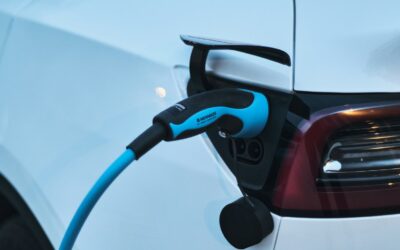

The Department for Transport has confirmed that Great Britain will adopt the EU’s Euro 7 standard. New cars and vans must comply from November 2027. Electric vehicle batteries will also need to hold 80 per cent of their capacity after five years or 100,000 km.
What has the government confirmed?
The decision brings Great Britain into line with the European Union on vehicle standards. Earlier Euro rules mostly covered exhaust pollution from petrol and diesel engines. Euro 7 also reaches electric cars and plug-in hybrids, and that’s the headline change for EV drivers.
New cars and vans registered in Great Britain must meet the standard from 29 November 2027. Small-volume manufacturers have until 1 July 2030.
The Department for Transport will accept EU and equivalent UN type approvals, so carmakers won’t need separate testing for Great Britain. Many already build one version of a model for several markets, and a shared standard avoids a split between British and European requirements.
Euro 7 goes beyond batteries too. Emission limits must now hold for ten years or 200,000 km in real-world driving, and the rules also reach brake and tyre particles.
What does the battery rule require?
An EV’s battery must keep at least 80 per cent of its capacity at five years or 100,000 km. In other words, it can’t lose more than a fifth of its storage within that window.
Capacity decides how far a car can travel on a full charge. For example, a car that loses a large share of capacity will also lose a similar share of its range. So a capacity floor works, in practice, as a range floor too.
This is a legal requirement set by government. Carmakers already offer their own battery warranties, and the terms vary between brands. Euro 7 sets a common minimum beneath all of them. Cars will also need onboard systems that monitor battery state of health.
Why is battery health important to drivers?
Battery health is one of the biggest questions for anyone buying an EV, especially on the used market. The battery is the most expensive part of an electric car, so its condition shapes resale value.
Until now, buyers have mostly relied on brand warranties and independent health checks, which can be hard to compare. A legal minimum gives everyone the same starting point, whichever badge is on the bonnet.
The rule should help first owners too. Someone who covers high mileage could reach 100,000 km well within five years, while a low-mileage driver will hit the five-year mark first. Either way, the standard sets a clear expectation for how the battery should hold up.
It may also ease a different kind of range anxiety. Many drivers worry less about range on day one and more about range years later, and a defined floor speaks to that concern.
What does this mean for carmakers?
The deadline adds a legal duty to build durable batteries. Most carmakers already design packs to last, and many offer long warranties. Even so, a fixed threshold raises the stakes for any model that falls short.
The rule could also shape choices about battery chemistry, cooling and charging software, because all of these affect how quickly a pack degrades. As a result, engineers may manage rapid charging more cautiously.
Because Great Britain is following the EU, carmakers won’t face two sets of durability targets. That’s useful for brands that sell the same models across Europe.
What happens next?
Carmakers now have until November 2027 to make sure their new cars and vans comply. Meanwhile, buyers can expect battery health to feature more prominently in sales conversations.
Details on how authorities will check compliance are still to come, and EVLife will follow them as the Department for Transport sets them out. Used buyers should benefit most once cars with onboard health data start reaching the second-hand market.