
The VW battery recall now has hard numbers behind it. Three campaigns listed by Germany’s motor transport authority cover about 72,700 electric cars across five models, around 9,900 of them in Germany, over battery cells that could overheat. Until owners’ cars are checked, charging is capped at 80 per cent.
What do the figures show?
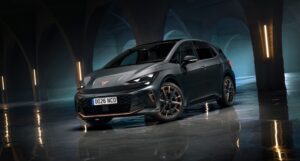
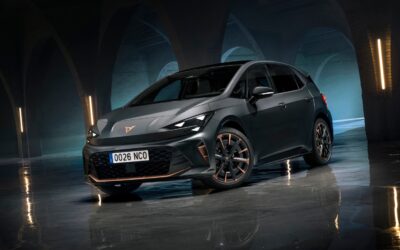
Germany’s Federal Motor Transport Authority, known as the KBA, lists three recall campaigns with the reference numbers 17137R, 17101R and 17103R. The published figures break down as follows. The largest campaign covers 62,927 Volkswagen ID. models worldwide, 7,112 of them in Germany. A second covers 5,050 cars, including 1,538 in Germany. The third covers 4,691 Cupra Born hatchbacks, with 1,231 in Germany.
Together, that comes to 72,668 vehicles, including 9,881 in Germany. The KBA lists all three campaigns as under investigation.
What’s wrong with the batteries?
Volkswagen says some high-voltage battery cells don’t meet its quality requirements because of manufacturing errors at a supplier. In rare cases, the affected cells can overheat. In extreme cases, that could lead to a fire. The KBA has no reports of damage or injuries linked to the fault.
The European recalls don’t name the cell supplier. Separately, Volkswagen is recalling ID.4 models in the US, but that campaign is a different action.
Which cars does the recall cover?
Five models appear in the campaigns. Four carry Volkswagen badges: the ID.3 hatchback, the ID.4 SUV, the ID.7 and the ID. Buzz. The fifth is the Cupra Born, from the group’s Spanish brand. All five sit on the Volkswagen Group’s MEB electric platform, so a fault in a shared component can reach several brands at once.
Production dates vary by campaign. The largest covers Volkswagen models built between 13 July 2022 and 6 June 2025. The second covers cars built from 18 September 2023 to 27 June 2025. For the Cupra Born, the window runs from September 2022 to May 2024.
How did the story develop?
Reports that Volkswagen was preparing a battery recall first emerged on 15 October. At that stage, there were no firm numbers, so owners had little idea of the scale. The KBA entries, with model-by-model figures, followed a few days later.
What should owners do now?
Recalls are a routine part of car ownership, and manufacturers normally contact affected owners directly. As an interim step, Volkswagen is limiting charging to 80 per cent through an over-the-air software update. Where a car can’t receive that update automatically, owners are asked to set the limit themselves.
Workshops will then inspect the high-voltage battery. If it passes, they’ll lift the charging cap. However, Volkswagen hasn’t yet decided on a permanent fix. Until the check, an affected car drives as normal, although the lower charge limit trims its usable range.
In the meantime, owners of an ID.3, ID.4, ID.7, ID. Buzz or Cupra Born can contact a dealer. A vehicle identification number, or VIN, lets the dealer confirm whether a specific car falls within the campaign. It’s also worth keeping your contact details up to date with the brand, so any recall letter reaches you.
What does this mean for Volkswagen?
For Volkswagen, the timing is awkward. The affected models form the core of its electric range in Europe, and they carry much of the group’s effort to win over drivers moving from petrol and diesel.
Battery recalls draw particular attention because the pack is the most expensive part of an electric car. It’s also the part buyers worry about most. Earlier long-term testing found the ID.3’s battery kept 91 per cent of its capacity after 160,000 km, so the group has evidence of durability to point to. Even so, how quickly and clearly it handles this fix will shape how current owners and future buyers feel about its electric cars.
Several questions remain open, including the permanent remedy and how long workshop visits will take. EVLife will update this story as Volkswagen, Cupra and the KBA release further information.