
NIO’s battery swapping network shattered records during the Chinese New Year holiday, handling over 165,000 swaps in a single day amid growing adoption and infrastructure expansion, highlighting the rapid evolution of long-distance EV travel in China.
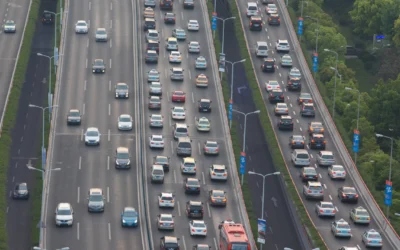
NIO reported an unprecedented surge in use of its battery swapping service during the Chinese New Year travel rush, with operators completing 165,898 swaps in a single 24-hour period on 19 February 2026, a figure published by several outlets covering the holiday peak. The company’s network handled heavy motorway flows as millions travelled for the Spring Festival, putting fast-refuelling alternatives for long-distance electric vehicle trips under intense real-world pressure. According to contemporaneous reporting, the busiest swap points that day were concentrated at highway service areas, underscoring the role of roadside infrastructure in enabling intercity journeys.
That daily total formed part of a sequence of progressively larger single-day highs through the holiday period but the precise peak varies between accounts. Some reports recorded earlier highs of 158,290 and later figures as high as 175,976 or 177,627 on successive days, reflecting rapid day-to-day growth and differing cut-offs used by outlets to tally swaps. Journalists and industry watchers noted the results were repeatedly eclipsing previous marks over several consecutive days, signalling intense, sustained demand rather than a one-off spike.
Public and independent tallies also differ on the size of NIO’s network, producing a range of station counts that complicate direct comparisons. Some sources state NIO operates roughly 3,700–3,750 battery swap stations with over 1,000 sited on expressways and a presence in several hundred cities, while others combine charging and swapping facilities to reach figures above 8,000. Those discrepancies appear to stem from contrasting definitions, whether a report counts only automated swap bays, includes conventional chargers, or aggregates multiple site types, and from rapidly changing buildout numbers over the festival period.
Performance claims from NIO and third-party observers illustrate both technical progress and rhetorical flourish. NIO’s corporate figures state an average swap time of about three minutes and highlight cumulative milestones such as a 100 millionth swap and more than 5.28 billion kWh delivered via swaps. By contrast, some independent coverage during peak days described average throughput rates that, when expressed across the national fleet and total daily swaps, were paraphrased as the equivalent of a vehicle being served in less than 0.5 seconds, an expression of scale rather than a literal exchange-time measurement for individual cars.

NIO’s own reporting places the technology at the centre of its expansion plans: the company has emphasised energy throughput, user time saved compared with conventional charging and ambitions to add large numbers of swap sites in the year ahead. The automaker told the press it intends further network growth and route connections to strengthen long-distance mobility, framing battery-swapping stations as both rapid refuelling points and distributed energy storage assets that can charge during low-demand periods and supply power when grids are strained.
Taken together, the accounts portray a system that has proven resilient under exceptional seasonal loads but remains in rapid flux. Usage spikes during the Spring Festival demonstrated the concept’s potential to ease long-distance EV travel and concentrate demand at motorway hubs, yet divergent station counts and varying daily totals highlight how quickly the operational picture is evolving and how reporting methodologies shape public perceptions of scale.