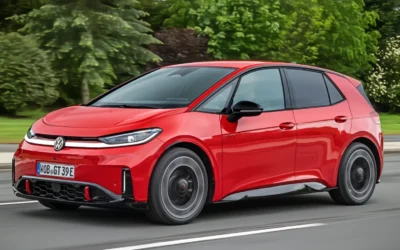

You know that feeling when the battery hits 10% and you’re miles from home? You’ve probably been there. Honestly, the old fear of running out of juice is mostly gone since most modern electric cars hit 230 miles easily.
So, what changed?
We would say the focus has shifted. It is now more about the charging reality. How we stop and where we plug in determines the rhythm of the journey now.
The Infrastructure Landscape
The way we power our cars on long hauls has changed dramatically over the last few years. We have moved away from the era of the lonely, flickering charger tucked behind a skip. Speaking of which, I once found a charger located behind a locked gate at a car dealership that closed at 5 PM. Talk about poor planning. Anyways, let’s get back to the point.
The Rise of the Ultra-Rapid Hub
In terms of progress, the most significant shift has been the transition to dedicated charging hubs. We are talking about sites hosted by players like InstaVolt, GRIDSERVE, and MFG EV Power.
Instead of one or two temperamental units, you now find 12-bay or even 24-bay stations. These are the “petrol stations of the future,” albeit with better coffee and hopefully cleaner toilets. Having a bank of chargers means your odds of finding a working plug are significantly higher. If one is down, you just move to the next.
Reliability Metrics
In our experience, uptime has become the new currency of the road. It is the only metric that genuinely matters when you are down to your last 30 miles of range. The psychological impact of arriving at a massive, well-lit 150kW+ hub is night and day compared to a single 50kW unit.
You feel a sense of relief when you see those green lights from a distance. Reliability is what builds trust, and trust is what encourages people to take the leap into full-time EV ownership.
Geographic Disparity
To be fair, the experience is not uniform across the board. In some countries, there are real geographical disparities. In the UK for example, there is a visible North-South divide in rapid charging density. If you are driving through the English Midlands, you are swimming in options.
But look toward the rural stretches of Wales or Northern Scotland, and you will find “charging deserts.” These areas require a bit more foresight. We would say that while the highway network is getting there, the rural lanes are somewhat lagging.
Part of the reason the UK experience feels more predictable than in many other regions is the relative consistency of its charging setup, something that becomes clearer when you look at how global EV charging standards differ by region.
The Technical Reality (Speed vs. Expectation)
Believe it or not, just because a charger says 350kW on the side does not mean you will be out of there in ten minutes. There is a massive gap between advertised speeds and what actually happens when you plug in.
The Speed Gap
So, why does it take so long?
Several factors are at play here.
First, there is battery pre-conditioning. If your battery is too cold or too hot, it won’t accept the maximum juice.
Then you have the state-of-charge curve. Your car charges much faster when the battery is nearly empty than when it is almost full.
On top of that, many hubs use shared power architectures. If the guy next to you in a Porsche Taycan is pulling 270kW, your speed might drop. Long story short, don’t expect a flat line of high speed.
Hardware Compatibility
Have you ever tried to use a charger only for the screen to say “initialization error” for five minutes? We’ve found that handshake issues between vehicle software and charging networks are still a major headache.
Every car talks to every charger in a slightly different way. Sometimes, the software versions just don’t get along. It is strangely similar to trying to get an old printer to work with a new laptop. Usually, a simple unplug and try again fixes it, but it adds a layer of friction that we could honestly do without.
Payment Friction
Look, no one wants to download fifteen different apps just to pay for electricity. The Public Charge Point Regulations 2023 have pushed for mandatory contactless payment, which is a huge win.
That said, the “one app to rule them all” fantasy is still a work in progress.
Most of us still have a folder on our phones dedicated to charging apps just in case the contactless reader is acting up.
On the whole, things are getting better, but we are not quite at the “swipe and go” simplicity of a petrol pump yet.
The Logistical Pivot
The way we plan our lives around our cars is shifting. We are no longer trying to mirror the “fill up once a week” habit of internal combustion engines.
Destination Charging
If you are reading this, you are likely looking for ways to make your trips smoother.
Here is a tip: destination charging is well worth the effort. Finding a hotel or B&B with a Level 2 EV charger is a total game changer. It means you wake up with a full charge every morning, which effectively removes one or two rapid charging stops from your day.
For many of us, the presence of a charger has become a deal-breaker when booking a room. Honestly, I’d take a slower charger and a mediocre breakfast over a fancy hotel with nowhere to plug in.
En-Route Psychology
The 20-minute rapid charge is changing how we drive. We are moving away from the big lunch stop where you sit in a service station for an hour. Instead, drivers are opting for the splash and dash.
You stop for fifteen minutes, grab a coffee, check your emails, and you are back on the road. It is a more frequent but less taxing way to travel.
The Cost Reality
We need to talk about the “convenience premium.” Ultra-rapid charging is not cheap. In fact, it can be significantly more expensive than charging at home.
When you factor in these prices, the total cost of an EV road trip starts to look strikingly similar to a diesel journey. Having said that, you are paying for the infrastructure and the speed.
For the most part, the savings you make during the rest of the year by charging at home make up for the occasional splurge on the highway.
Solutions and the Near Future
The road ahead looks promising, even if there are a few bumps in the tarmac. We are seeing a smarter approach to how we handle the grid.
Planning Tools
Intelligent routing tools like ABRP (A Better Routeplanner) and Zapmap have become essential. These tools are not just maps; they are data-driven tools that account for weather, elevation, and real-time charger status.
If a hub goes down, the car’s in-car nav can often redirect you before you even realize there is a problem.
This layer of intelligence is perhaps the most important development in recent years. It turns a potential disaster into a minor detour.
Policy and Growth
The UK’s Rapid Charging Fund and the expansion of the Electric Highway have been huge drivers of growth. Governments are finally realising that if they want people to buy the cars, they have to build the plugs. Hence, the rapid expansion we are seeing today. There is a lot of money flowing into this sector, and it shows.
The New Normal
Seasoned EV drivers are adapting their expectations. We’ve found that a perfect infrastructure is actually less important than a predictable one.
We can handle a slightly slower charger if we know for certain it will work when we get there.
As the network matures, the drama of the EV road trip is fading away. It is just becoming… driving. And that is exactly how it should be.
Frequently Asked Questions
Is it still necessary to plan every stop before I leave?
Not really, particularly if you are staying on major highways. With the rise of large hubs, you can usually just drive and wait for the car to tell you when it needs juice. However, if you are heading into rural areas, a quick look at Zapmap is probably a good idea. Better safe than sorry, as they say.
Why is my car charging much slower than the charger’s advertised speed?
It probably comes down to your battery temperature or your state of charge. If your battery is already 80% full, it will slow down to protect the cells. Also, check if you are sharing power with the car next to you. It is rarely a fault with the car itself; it is just the physics of lithium-ion batteries.
What should I do if I arrive at a hub and all chargers are broken or full?
First, don’t panic. Check your planning app for the nearest alternative. Most modern hubs are located near other chargers. If they are just full, you might have to wait a bit. Since most people are doing a splash and dash, the turnover is usually pretty quick.