The original article from May 2025 has been updated in April 2026 to include new information released about the Lexus TZ.
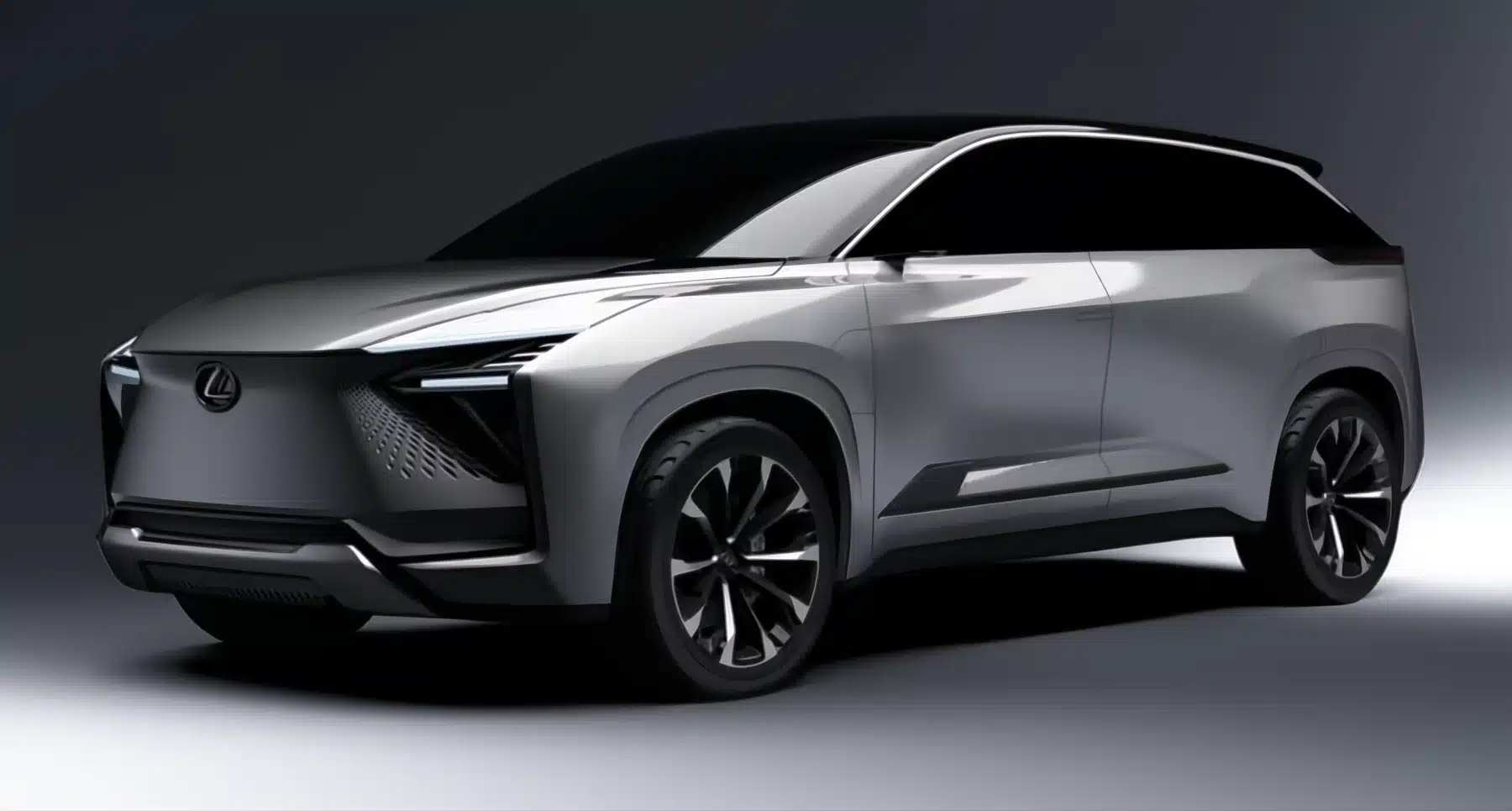
Lexus is preparing to enter the full-size electric SUV market with the all-new TZ, a three-row, all-electric model that has now been caught testing at the Nürburgring for the first time. A reveal is expected in the second half of 2026, with an on-sale date in 2027. Building on the design language of the Lexus Electrified SUV Concept unveiled in 2021, the TZ aims to position the brand within a growing segment that merges electrification with family-sized practicality.
The move reflects a broader industry trend. While overall global EV adoption has been slower than initially projected, demand for large, versatile electric SUVs continues to gain ground. Vehicles like the Kia EV9 have already established a strong foothold in the three-row electric SUV market, offering a blend of range, space, and tech-rich interiors that appeal to family buyers.
A New Electric Flagship?
Lexus has not yet released official images or confirmed specifications. However, recent spy shots tell a revealing story. The prototype, draped in heavy camouflage wrap, shows a vehicle with a decisively sloping roofline and muscular rear haunches, giving the TZ a more athletic stance than typical three-row family haulers. A full-width taillight bar runs across the rear, consistent with Lexus design cues on newer models. Flush door handles and what appears to be a panoramic roof are also visible through the camouflage.
One detail from the spy shots stands out for rear-seat buyers. A large slanted window behind the C-pillar suggests third-row occupants will have a meaningful view out, rather than the claustrophobic slot common in this segment.
Trademark filings for the names “TZ450e” and “TZ550e” point to at least two performance configurations. Based on analyst expectations, the TZ450e is likely to produce around 338 horsepower with a range of more than 300 miles. The TZ550e is expected to target roughly 420 horsepower, paired with a 95.8kWh battery pack, in a dual-motor all-wheel-drive layout similar to that of the Lexus RZ 550e.
An F Sport version is also anticipated. Given how Lexus applied the treatment to the 2026 RZ 550e F Sport, the TZ F Sport would likely bring sport-tuned suspension, unique styling elements, and possibly the M Mode virtual gear-shift system introduced on the RZ.
What Platform Will It Use?
The TZ will share its platform with the all-new 2027 Toyota Highlander EV, Toyota’s first three-row battery-electric vehicle for the US market. That vehicle rides on a modified TNGA-K platform engineered to accommodate high-capacity battery packs. The spy shots of the TZ prototype appear to confirm this relationship: the roofline and greenhouse are closely matched to the Highlander EV’s proportions.
This shared architecture mirrors the relationship between the Lexus TX and the Toyota Grand Highlander, both of which share underpinnings and are assembled at the same plant in Princeton, Indiana. The approach allows Lexus to build on proven engineering while differentiating through premium materials, ride refinement, and the quieter cabin experience the brand’s buyers expect.
The battery technology is also worth watching. The 2027 Highlander EV is available with two pack options: 77kWh and 95.8kWh. Unverified reports have suggested Toyota’s next-generation cells could offer meaningful gains in range and cost efficiency over the current bZ4X generation, though Lexus has not confirmed figures for the TZ specifically.
Who Is It Up Against?
The TZ will serve as a fully electric counterpart to the Lexus TX, a three-row ICE and hybrid SUV launched in 2024. When it arrives, it will enter a segment that has grown considerably since the TZ was first trademarked. Rivals now include the Kia EV9, the Hyundai IONIQ 9, the Rivian R1S, the Volvo EX90, and the Lucid Gravity. The German luxury brands have yet to field strong three-row electric competitors, which gives Lexus an opportunity to capture premium family-SUV buyers with a credible alternative.
The Nürburgring testing is also encouraging for driving dynamics. It is an unusual venue for a vehicle that will spend most of its life on school runs and motorway journeys, but it signals that Lexus is calibrating the TZ for a sharper on-road feel than the segment average. That would align with the brand’s recent direction on the RZ and the broader push toward a more engaging electric driving experience.
When Can You Expect It?
The production-specification TZ is expected to premiere before the end of 2026, with US dealership arrivals likely in early 2027. That timeline follows the anticipated on-sale date of the 2027 Toyota Highlander EV, which serves as the TZ’s platform donor. Lexus has confirmed plans to debut two electric vehicles in the United States during 2026, with the TZ widely expected to be one of them.
The TZ will be the most significant electric vehicle in Lexus’s history to date: a full-size, three-row family SUV with genuine luxury positioning, real-world range figures, and a powertrain range broad enough to attract both efficiency-focused buyers and those seeking performance. With spy shots now in circulation and a reveal window narrowing, the wait is nearly over.