
The global electric vehicle market is entering a more uncomfortable phase. Sales continue to rise, battery costs keep falling, and model choice has never been broader. Yet across many mature markets, the financial scaffolding that supported early EV adoption is being dismantled. Purchase grants are shrinking, tax exemptions are expiring, and governments are signalling that consumers should increasingly bear the full cost of electrification.
This shift does not represent retreat from electric mobility. Instead, it reflects recalibration. Policymakers now argue that universal incentives have achieved their purpose in early-adopting markets, while remaining essential elsewhere. The result is a fragmented global landscape shaped by fiscal pressure, industrial strategy, and political ideology.
Global EV sales passed 17 million units in 2024, with market share exceeding 20 percent, and are projected to reach around 25 percent of new car sales in 2025, equivalent to roughly 19 to 20 million vehicles.Momentum remains strong, but the drivers are changing. Growth now relies less on consumer subsidies and more on infrastructure rollout, corporate fleets, and price competition from manufacturers.
Why are governments pulling back incentives now?
Public finances sit at the centre of subsidy reversals. As EV adoption scales, supporting every purchase becomes costly. Germany ended its national purchase grant in late 2023 after a constitutional court ruling constrained federal budgets. France reduced its EV subsidy allocation from €1.5 billion ($1.63 billion) to €1 billion ($1.09 billion) in 2025. The Netherlands has committed to full road tax parity between EVs and petrol cars by 2030.
Political change also plays a role. In the United States, federal EV tax credits of up to $7,500 for new vehicles and $4,000 for used ones expire for vehicles acquired after 30 September 2025. The same legislation weakened emissions enforcement and removed penalties for missing fuel economy targets, reducing regulatory pressure on manufacturers in the short term.
In each case, policymakers frame the shift as a move toward market maturity. EVs, they argue, no longer require blanket support. Continued subsidies risk distorting competition and locking in long-term fiscal liabilities.
Is this the end of EV support in Europe and the US?
Support is changing rather than disappearing. Direct purchase grants are fading, but tax advantages and targeted schemes remain. Germany offers a clear example. There is no national cash incentive, yet battery electric vehicles remain exempt from vehicle tax for ten years. Company car drivers benefit from a reduced benefit-in-kind rate, with the qualifying price cap raised to €95,000 ($103,500) in 2025.
Germany has also introduced a €3 billion ($3.26 billion) fund to support social leasing schemes. These programmes allow lower-income commuters to access an EV for around €99 ($108) per month. France follows a similar approach. Purchase incentives now range from €2,000 to €4,000 ($2,180 to $4,360), depending on income, while penalties on high-emission vehicles have increased through a stricter malus tax.
The Netherlands illustrates another trend. EVs still receive a 75 percent discount on road tax in 2025, but this falls to 30 percent between 2026 and 2028, then 25 percent in 2029, before disappearing entirely in 2030. The message is explicit. Tax parity is coming.
What about the UK and the cost of using an EV?
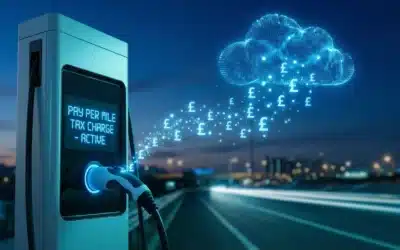
The UK adds a further dimension to the subsidy debate. While national purchase grants ended several years ago, the government has now signalled a direct increase in EV running costs. From 2026, ministers plan to introduce per-mile road pricing for electric vehicles as part of wider reforms to replace declining fuel duty revenues.
This represents a structural shift. Unlike subsidy withdrawal, which removes a benefit, per-mile charging actively increases the cost of EV use. Officials argue that it restores fairness as EV uptake rises, but the policy risks undermining one of the strongest economic arguments for electrification, namely lower operating costs. For high-mileage drivers and fleets, the impact could be material.
How is China handling subsidy withdrawal?
China’s approach is more gradual and strategic. New energy vehicles remain fully exempt from purchase tax through 2025, capped at CNY 30,000 per vehicle, equivalent to around $4,175. From January 2026, the exemption halves to five percent, with a lower cap of CNY 15,000, or roughly $2,090, before expiring after 2027.
Rather than abandoning support, Beijing has redirected it. A national scrappage scheme offers up to CNY 20,000, about $2,750, to consumers replacing older vehicles with EVs. By late 2024, more than 6.6 million applications had been submitted. The policy supports sales while accelerating fleet renewal and emissions reductions.
China has also prioritised commercial vehicles. Electric trucks benefit from scrappage subsidies of up to CNY 140,000, around $19,000. As a result, battery electric models accounted for more than 20 percent of new heavy truck sales in 2025. Support flows where fuel savings and emissions reductions are greatest.
Are emerging markets taking the lead?
Emerging economies now account for much of global EV growth. In Southeast Asia, Viet Nam and Singapore reached EV sales shares of around 40 percent in 2025. Thailand crossed 20 percent, supported by tax holidays and export incentives. Indonesia reached 15 percent by linking EV policy to domestic nickel processing.
Latin America shows a mixed picture. Brazil doubled its EV sales share, while raising import tariffs to 25 percent, or roughly $5,000 on a mid-priced EV, to encourage local assembly. Africa offers the most striking case. Ethiopia effectively banned new internal combustion passenger car imports in 2024, pushing EVs above 60 percent of new registrations within a year.
In these markets, incentives remain essential. Without tax exemptions, import relief, and industrial support, EVs would struggle to compete on upfront cost.
Do trade disputes change the subsidy calculus?
Trade tensions increasingly shape EV policy. The European Union has imposed countervailing duties on Chinese EV imports, ranging from 17 percent to more than 35 percent, following an anti-subsidy investigation. China has challenged India’s EV incentives at the World Trade Organization, arguing that domestic content rules breach trade law.
These disputes underline a broader shift. EV subsidies now serve industrial and geopolitical objectives alongside climate goals. As a result, they are more targeted, more conditional, and more contentious.
Are EV subsidies really dying?
Universal purchase grants are fading in several mature markets. Targeted support, tax policy, and regulatory pressure are replacing them. In parallel, some governments are actively increasing EV ownership costs through measures such as road pricing.
This marks the transition from early adoption to market normalisation. EVs no longer depend on subsidies everywhere, but they still rely on them somewhere. The risk lies in withdrawing support faster than costs fall. The balance between fiscal realism and climate ambition has never been narrower.