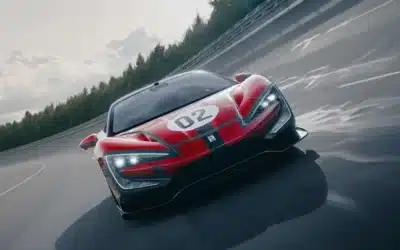
Saudi Arabia’s first homegrown electric vehicle brand, CEER Motors, has moved to correct online misreporting after images of an aggressive new EV prototype were widely misidentified as an Aston Martin test mule. The images, which circulated over the weekend, in fact show an early CEER development vehicle, according to image credits supplied to Spain’s Motor.es and reporting by The Supercar Blog.
The confusion reflects both the scarcity of publicly released information about CEER’s first model and the growing international attention around Saudi Arabia’s ambitions in electric mobility. CEER, backed by the Public Investment Fund, plans to launch its first production vehicle in late 2026, with manufacturing centred at a new facility in King Abdullah Economic City.
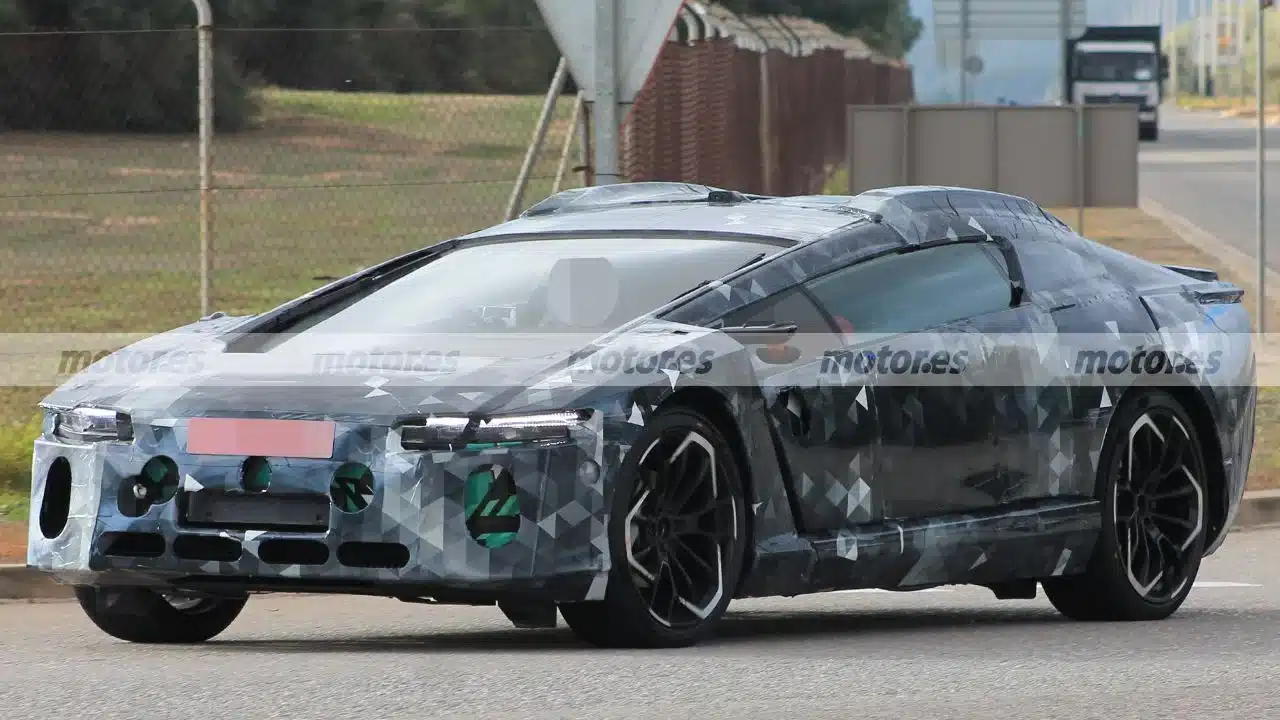
The photo that caused the confusion…
What exactly was misidentified?
Images of the prototype appeared online showing a low, wide-bodied electric vehicle undergoing testing. Several outlets initially described the car as an Aston Martin development mule, citing its proportions and performance-focused styling. The Supercar Blog later clarified that the vehicle belonged to CEER, crediting Motor.es for the original imagery and identification. No comment was issued by Aston Martin, and CEER has not released official images of the prototype.
The episode highlights the limited visibility of CEER’s vehicle programme to date. Beyond confirming a late-2026 production start, the company has disclosed few details on specifications, powertrain outputs, or target markets.
How advanced is CEER’s manufacturing plan?
CEER is building a purpose-designed manufacturing campus covering more than one million square metres at King Abdullah Economic City, according to previous reporting by Arab News. The site will include press, paint and general assembly shops, forming a vertically integrated production operation.
Construction began after CEER acquired the industrial land in a deal valued at SR359.04 million, equivalent to about $95.7 million at current exchange rates. Company projections cited by Arab News indicate the plant is expected to support thousands of jobs once fully operational, with a focus on high-skilled roles for Saudi nationals.
CEER has also stated that the facility is designed to support a high level of automation and digital manufacturing, aligning with the Kingdom’s wider industrial strategy under Vision 2030.
Who are CEER’s key technology partners?
Rather than developing all systems in-house, CEER has assembled a network of international suppliers. In 2024, the company announced a partnership with Rimac Technology to supply integrated high-performance electric drive systems for flagship models. Rimac described the agreement as its first partnership in the Gulf region, according to Arab News.
Separately, CEER signed a SR8.2 billion, or roughly $2.18 billion, supply agreement with Hyundai Transys for compact three-in-one electric drive units combining the motor, inverter and reduction gear. CEER has said the integration is intended to improve efficiency and packaging while reducing system weight.
On the software and industrial side, Siemens Digital Industries Software is providing its Xcelerator platform to link vehicle development with manufacturing processes, supporting what CEER describes as an end-to-end digital workflow.
What is the economic significance for Saudi Arabia?
CEER has signed 11 localisation and supply agreements valued at SR5.5 billion, around $1.47 billion, with more than 80 percent involving Saudi companies, according to Arab News. The company has set a localisation target of 45 percent, positioning itself as a cornerstone industrial project rather than a niche automotive entrant.
Saudi officials and industry estimates cited in earlier reporting suggest CEER could contribute around SR30 billion, approximately $7.9 billion, to national GDP by 2034. These figures remain projections, and CEER has not published detailed volume or export forecasts.
When will more details emerge?
For now, the misidentified prototype offers a rare glimpse of CEER’s design direction rather than its technical credentials. Pricing, range, battery capacity and charging specifications remain undisclosed. CEER has said more information will be released closer to the planned production launch in the fourth quarter of 2026.
Until then, the episode underscores how quickly interest is building around Saudi Arabia’s first domestic EV brand, even before its first car officially breaks cover.