
Abu Dhabi has switched on 332 electric vehicle charging points inside its paid public car parks. They’re the first live part of a plan for more than 9,000 points across the emirate by 2032. For drivers without a home charger, a parking bay can now double as a place to charge.
What has Abu Dhabi switched on?
The Integrated Transport Centre, known as Abu Dhabi Mobility, announced the milestone on 11 November. The centre is part of the emirate’s Department of Municipalities and Transport. Working with parking operator Q Mobility, it has commissioned 244 charging units. Together, those units provide 332 charging points.
All of them sit in public car parks run under the Mawaqif system. As a result, drivers can charge while parked in a designated bay, much as they would pay to park anywhere else in the city.
How big will the first phase get?
The live units are only part of phase one. That phase covers 1,000 charging units across 405 locations in 10 main areas of Abu Dhabi City, Al Ain City and the Al Dhafra Region. In other words, roughly a quarter of the phase one units are now working. The centre first set out its plan for 1,000台の新しい充電器 月2025中。
The hardware comes in two types. Standard chargers deliver 22 kW, which suits a long stop at the shops or the office. Fast chargers range from 60 kW to 160 kW, so they add range much more quickly during a shorter visit. Even so, the speed each car gets depends on how much power it can accept.
What is the long-term target?
By 2032, the centre plans to provide 4,500 charging units offering more than 9,000 charging points. These would cover about 2,250 locations across the emirate. The rollout follows a phased plan designed to keep pace with expected growth in demand.
Against that goal, today’s 332 points make up less than 4 per cent of the final figure. Still, phase one alone would put chargers into hundreds of everyday car parks.
Eng Hamad Adel Al Afeefi, Executive Director of the Intelligent Transportation Systems Sector at the centre, described the project as “a practical step” towards the centre’s goals for cleaner vehicles.
Who is building and running the network?
The centre is delivering the project through a public-private partnership. Under concession agreements, private firms handle the supply, installation, operation and maintenance of the chargers.
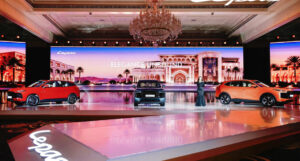
Three companies are taking part: ChargePoint, Tatweer Middle East & Africa and Loop Global. Because of that, drivers may meet a different operator depending on where they park.
How do drivers use the chargers?
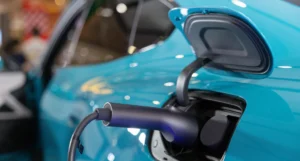
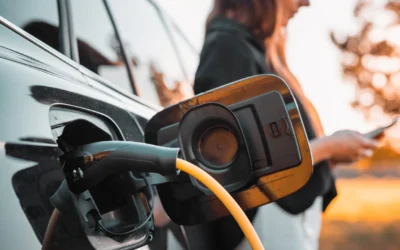
Each charging unit displays a QR code. Scanning it takes drivers to the app for that charging area, and they then follow the instructions on the unit or in the app. The same details help them find a station, check the connector suits their car, review approved tariffs and reach technical support.
The bay rules are firm. Drivers may use a charging bay only while their car is charging. Once charging finishes, they must move the car so others can plug in.
How much will it cost to charge?
Charging in these bays carries two costs. First, standard Mawaqif parking fees apply, as in any other paid bay. Second, each operator bills for the electricity at its approved tariff. The announcement doesn’t list those tariffs, so drivers should check the figures on the unit or in the app before plugging in.
What does car park charging change for drivers?
Many drivers live in flats or rented homes without a private charger. For them, a dependable public network often decides whether an electric car makes sense. By placing chargers where people already park, Abu Dhabi saves them a separate trip to a charging hub.
The mix of 22 kW and fast units also means one network can serve long stays and quick stops. However, how useful it proves will depend on clear pricing, reliable hardware and drivers leaving bays promptly. For now, 244 units and 332 public EV charging points are live, with more than 9,000 points planned by 2032.