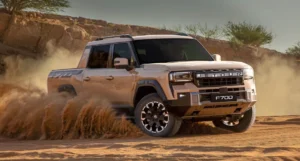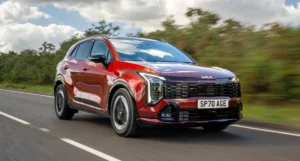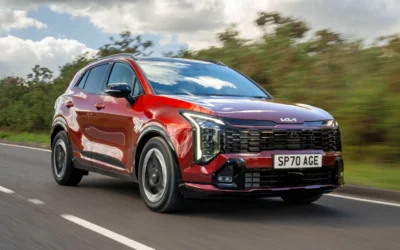

The UAE received 221,988 Chinese passenger cars between January and September 2026, enough to rank eighth among China’s export destinations. Yet shipments fell 35.7 per cent year on year, the steepest drop in the top ten.
What do the new figures show?
The data comes from the Gasgoo Automotive Research Institute and covers Chinese passenger car exports in the first nine months of the year. Over that period, 88,835 of the cars shipped to the UAE were new-energy vehicles, a group that covers fully electric cars and plug-in hybrids.
That’s about 40 per cent of the total, or roughly two in every five cars. It also places the UAE tenth in the world for Chinese new-energy imports.
New-energy shipments to the UAE fell 1.2 per cent. Small as that drop is, the UAE was the only one of China’s top ten car markets for new-energy vehicles where exports declined.
How does the UAE compare with other markets?
Russia tops the overall table by a wide margin. It took 727,579 Chinese passenger cars, up 114.1 per cent on a year earlier.
Brazil came second with 511,323 vehicles, a rise of 150.3 per cent. Meanwhile, the UK placed third with 417,120 cars, up 93 per cent.
Belgium and Australia followed with 360,598 and 337,490 vehicles respectively. Mexico and Italy came next, and then the UAE in eighth place. Below it, Spain received 196,780 Chinese cars and Thailand took 162,057.
So the UAE sits comfortably inside the top ten, even after its fall. By contrast, most of the markets around it grew quickly.
Where are Chinese electrified cars heading?
Brazil leads the new-energy ranking with 367,793 vehicles. Belgium follows with 347,322, while the UK takes third with 311,087. Australia ranks fourth on 252,823.
After that come Thailand, Germany, Italy, Spain and South Korea, with the UAE in tenth. Italy posted the fastest growth in the group, as its new-energy shipments jumped 240.5 per cent to 130,298 vehicles. Australia grew 181.9 per cent and Brazil 172.3 per cent.
Why does the electrified share stand out?
The two UAE figures point in different directions. Total Chinese shipments fell by more than a third, while new-energy shipments barely moved.
As a result, electrified cars now make up a larger part of the Chinese mix arriving in the country. Plug-in hybrids and battery-electric cars have held up far better than the wider flow.
The data doesn’t split the new-energy total between fully electric models and plug-in hybrids. Therefore, it’s hard to say which type is doing the heavy lifting. Chinese brands sell petrol, electric and plug-in hybrid cars in the UAE, so shifts between those segments could easily reshape the totals.
What do the numbers leave out?
Gasgoo counts vehicles exported from China to each destination. It doesn’t count retail sales or new registrations inside those countries. Cars may sit in stock after they arrive, or move on to other markets.
Consequently, the 35.7 per cent fall shows how many cars left China for the UAE. It doesn’t show that demand in UAE showrooms fell by the same amount. The figures also give no reason for the decline.
What comes next for Chinese brands in the UAE?
Nearly 222,000 vehicles in nine months is still a large volume for a country of the UAE’s size. Chinese makers’ prospects there will depend on pricing and product quality. After-sales service, spare-parts supply and maintenance networks will also play a part.
For electric and plug-in hybrid owners, those service questions carry extra weight, because battery and software support needs specialist workshops.
Meanwhile, China’s exports keep climbing elsewhere, with strong growth in Russia, Brazil, the UK and several European markets. The final quarter’s figures will show whether the UAE’s slide continues. For now, it holds its top-ten place, with electrified cars forming a growing share of what arrives.