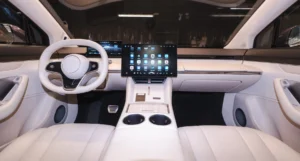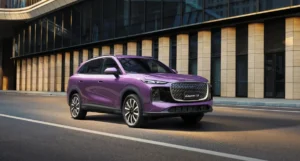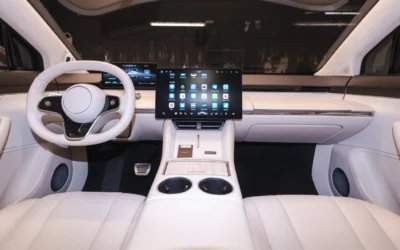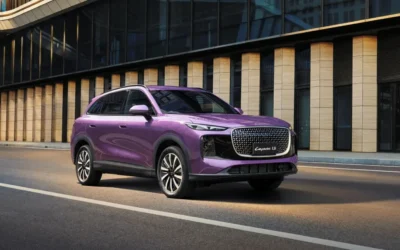

Geely’s premium Zeekr brand is taking its flagship hybrid SUV global. The 9X will enter the Middle East in June 2026. Central Asia follows shortly after. Europe receives the model later in the year. Zeekr chief executive Gan Jiayue set out this timetable at Geely’s first-quarter results briefing. The 9X is therefore being positioned as a key export product, not merely a domestic success story.
What is the Zeekr 9X?
The 9X is a large plug-in hybrid SUV. It went on sale in China in September 2025. Its starting price was 465,900 yuan, equivalent to around £53,000 at current rates. That places it firmly in the luxury segment. Zeekr has designed it for buyers who want full-size SUV space with electrified efficiency. It is the first hybrid model in Zeekr’s range, which has until now been entirely battery-electric.
How has the 9X performed in China?
Domestic demand has been strong. Zeekr delivered 22,000 units of the 9X in the first quarter of 2026 alone. Cumulative deliveries passed 50,000 by 23 April, according to company updates. In addition, the model’s average transaction price climbed to 530,000 yuan. That is notably higher than the entry price. Buyers are therefore choosing well-equipped versions in significant numbers.
Where will the 9X go first overseas?
The Middle East receives the 9X from June 2026. Central Asia follows in the third quarter. Europe is scheduled for the fourth quarter. Gan confirmed this sequence at the quarterly briefing. The Middle East launch comes first because Geely has already identified the region as a priority growth market. Consequently, infrastructure and distribution groundwork is further along there than in Europe.
Is the 9X the only model going international?
Zeekr has a second hybrid heading overseas. The 8X will launch abroad in the fourth quarter of 2026. Zeekr launched the 8X in China earlier in May 2026. Its limited-time starting price in China is 329,800 yuan. The 8X sits below the 9X in the range. As a result, it gives Zeekr a more accessible price point for international markets. Together, the two models give Zeekr a hybrid line-up to complement its existing battery-electric cars.
How does this fit into Geely’s wider export strategy?
The 9X expansion sits within a broader Geely export push. Geely reported first-quarter 2026 revenue of 83.78 billion yuan. That is 15 per cent higher than the same period last year. Profit attributable to shareholders fell 27 per cent to 4.17 billion yuan. Foreign-exchange movements drove that decline. However, core profit, stripped of one-off items, rose 31 per cent to 4.56 billion yuan.
Overseas sales reached 203,024 vehicles in the first quarter. That more than doubled year on year. Geely says it expects to reach a full-year export target of 750,000 units. The group has also outlined plans for three markets each selling 200,000 units and two markets each selling 150,000 units. The Middle East is among the regions expected to contribute meaningfully to those figures.
Why does this matter for the electric vehicle market?
Chinese premium electric and hybrid vehicles are moving into markets that European and Korean brands have long held. Zeekr enters Europe with a model already proven at volume in China. For example, 50,000 deliveries in under seven months is a meaningful benchmark for a vehicle priced above 465,000 yuan. Meanwhile, European consumers will encounter the 9X as a direct alternative to established luxury SUVs. The pricing, when converted, places it in competition with models from established German and British marques. Therefore, how European buyers respond will tell the wider industry something important about appetite for Chinese luxury cars.
The 8X’s later arrival adds further breadth. In addition, Zeekr’s parent company is clearly committing serious resource to overseas growth. The numbers from Q1 2026 give that commitment some weight.